The Clans of Cavan: A Field Guide to the Families Who Ran the Place
Ask a room in Cavan town to raise a hand if their surname is O’Reilly and you will be looking at a small forest. Add the Bradys, the McKiernans, the McGoverns and the Smiths and you have accounted for an unreasonable share of the county. That is not a coincidence and it is not idle chat. For something like four hundred years a handful of families ran this place, and everybody else either worked for them, married into them, or spent the evening composing a complaint about them.
What follows is a guide to the ones who mattered most, in roughly the order they mattered, along with an honest note on what can and cannot be proved about your own connection to them. It is longer than it needs to be. So is Cavan.
Before there were clans, there was Breifne
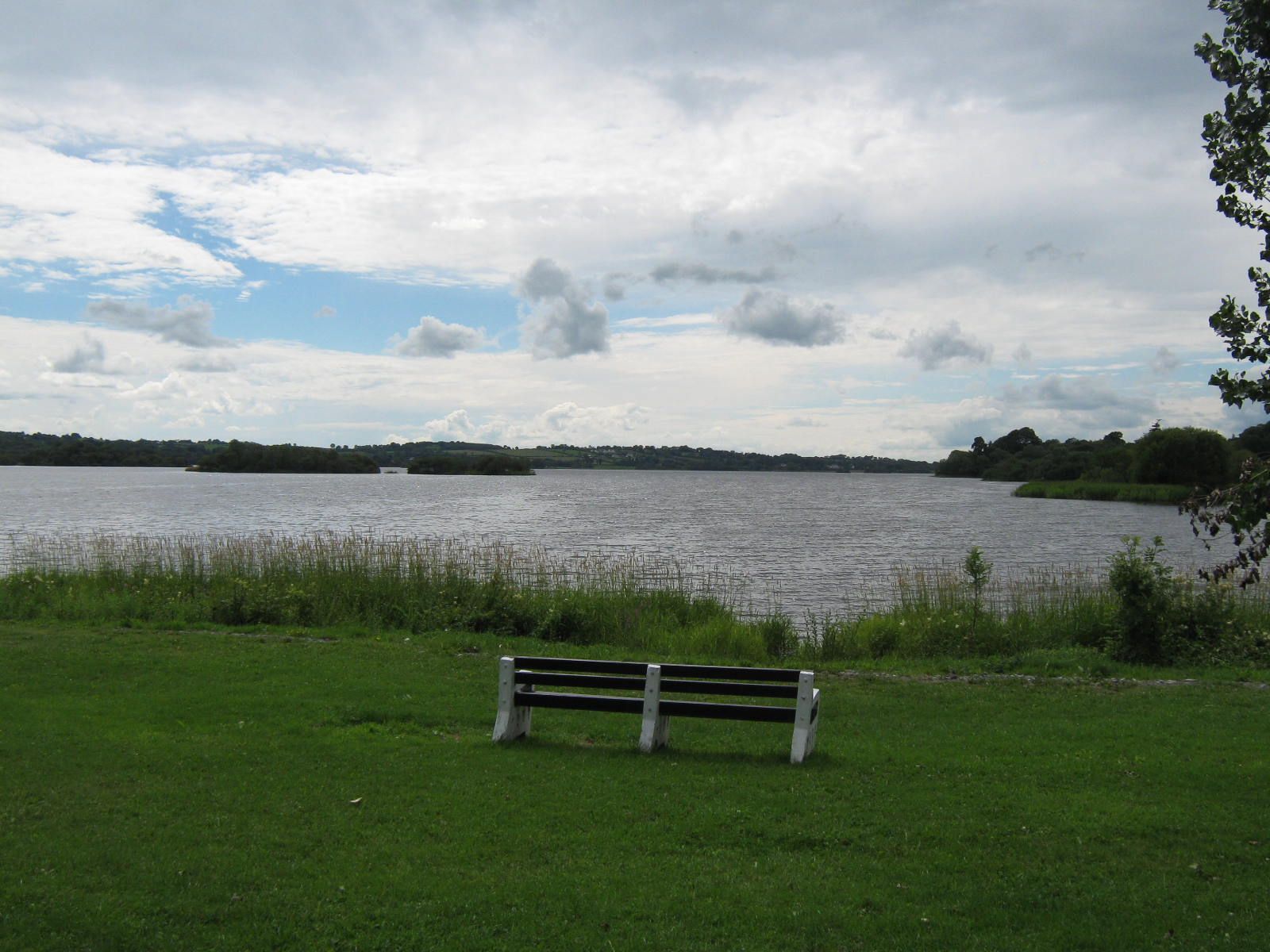
Everything in Cavan starts with Breifne, and Breifne starts as something between a kingdom and a row. It was a medieval overkingdom covering what is now Leitrim, Cavan and parts of the neighbours, and it lines up almost exactly with the Roman Catholic Diocese of Kilmore, which is the sort of detail that makes genealogists go quiet and happy.
It had come together by the tenth century as a confederation of small territories headed by an overking drawn from one kindred, the Ui Briuin Breifne. By the eleventh century the O’Rourkes were running it. It peaked in the twelfth under Tighernan Ua Ruairc, who reigned from 1124 to 1172 and who had the sort of life that would now require a content warning. In 1152 the King of Leinster, Diarmait Mac Murchada, abducted Tighernan’s wife, Derbforgaill. Tighernan went to war over it, won, and in the course of the mess helped topple Mac Murchada, who then sailed off to England to look for help and came back with the Normans. Historians argue about how much weight to put on the abduction. Nobody argues that it was unimportant.
Tighernan was killed in 1172 at a parley at Trim by Hugh de Lacy, which tells you what a parley was worth. What followed was a long, miserable struggle for the top job between the O’Rourkes and the O’Reillys, and it ended in 1256 at the Battle of Magh Slecht with the kingdom splitting in two. West Breifne went to the O’Rourkes and became Leitrim. East Breifne went to the O’Reillys and became Cavan. The county’s name is not a clan name at all. It is An Cabhan, the hollow, taken from the town, and the town took it from the shape of the ground.
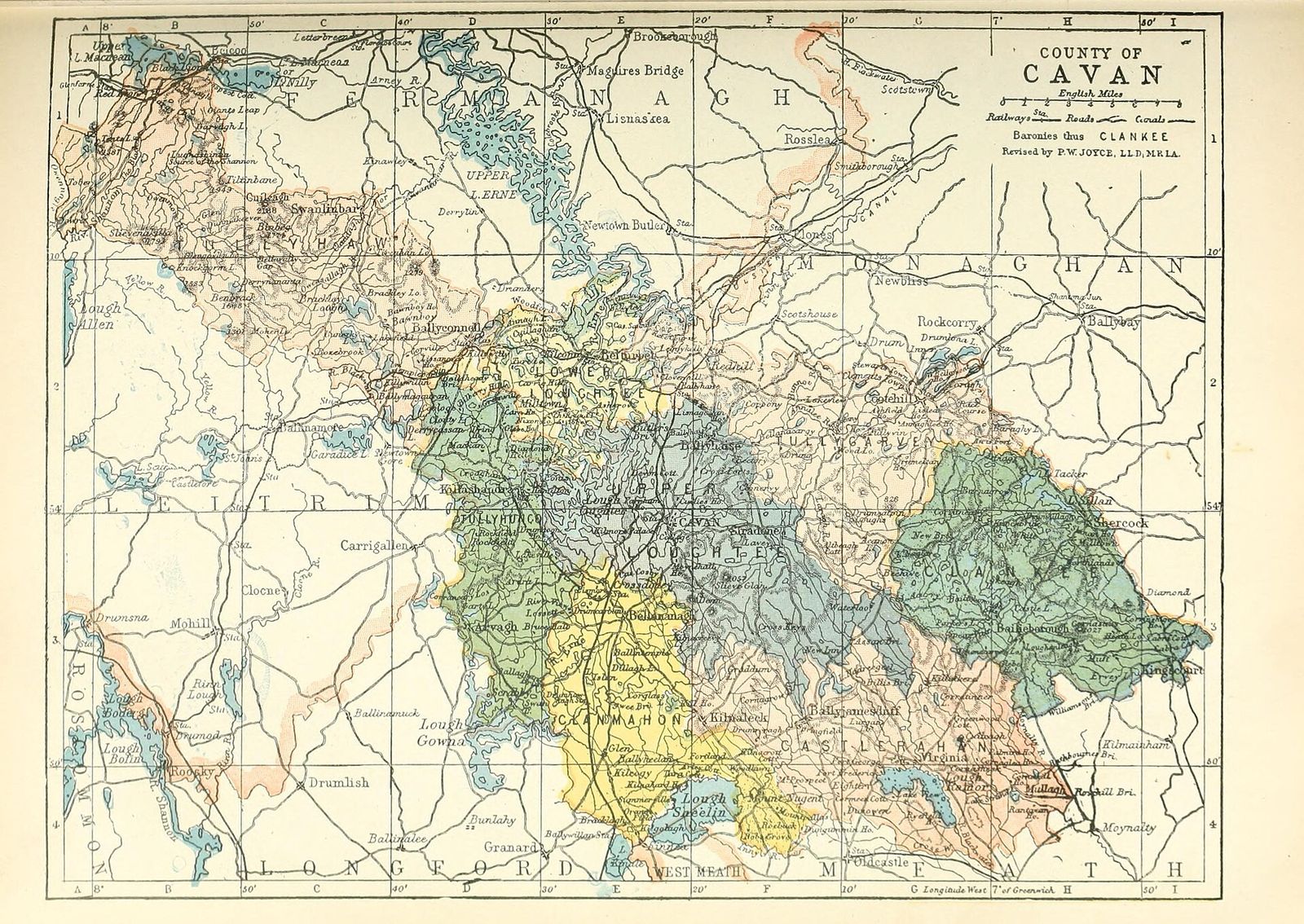
The shiring happened in 1579, and in 1584 Sir John Perrot pulled Cavan into Ulster and carved it into baronies. Seven were named at the time and eight are recognised today. Five of them went to the O’Reillys, and the two that did not went to precisely the families you would least expect to be handed a barony.
The O’Reillys, who won
The O’Reillys are the headline act and the ones with the best material, so let us give them room. They came out of the Ui Briuin, then split off into a group called Muintir Mhaoilmordha after a ninth-century chief of the same name, and they turn up in the annals for the first time in 1126 as a clan around Lough Ramor in a district called Machaire Gailenga, holding it as vassals of the O’Rourkes. The surname itself means descendant of Raghallach, and Raghallach is traditionally said to have died at Clontarf in 1014.
The rise of the clan was not dignified. When the Normans arrived the O’Reillys looked at the situation and picked the side that would help them get out from under the O’Rourkes, which meant siding with the invaders. During the Siege of Dublin the O’Rourke king was outside the walls with the Gaelic alliance and the O’Reilly king was inside with Strongbow, swapping notes. It worked. The O’Rourkes were driven back, and by the 1230s the O’Reillys had the kingdom.
They then spent the rest of the medieval period defending it from everyone, including each other. Cathal O’Reilly knocked down de Lacy’s castle at Kilmore in 1226 and killed the O’Rourke king’s son at Lough Allen. When Aodh O’Donnell of Tyrconnell sailed south into Lough Oughter, he destroyed Cathal’s house, abducted his wife Cacht and killed his favourite horse, which in that world was three separate insults and quite possibly ranked in that order. They made peace shortly afterwards.
At Magh Slecht in 1256 the O’Reillys lost both their leading men in one afternoon, Cuchonnacht and Cathal, along with fourteen other nobles of the sept. The clan survived it, but the decades that followed were so chaotic that in the late thirteenth century the McKiernans of Tullyhunco and the McGoverns of Tullyhaw combined to attack the king’s residence. King Ferghal responded by moving east to Tullymongan Hill and building a castle there, which stayed the seat of the O’Reilly kings for over two hundred years.
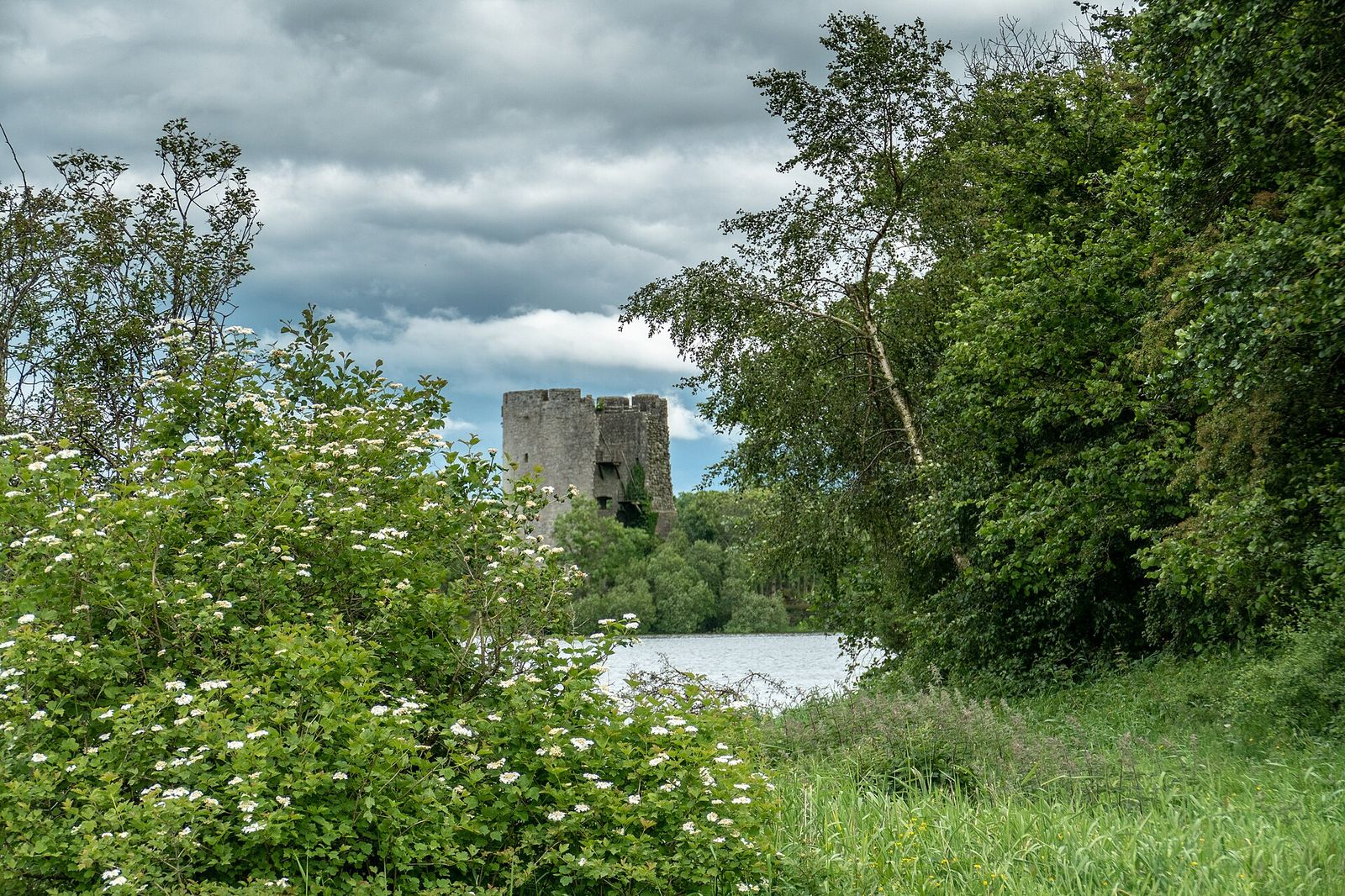
Cloughoughter Castle was theirs by 1233, and it is the best surviving piece of the story. It sits on a small island in Lough Oughter, possibly on an artificial one, and it was built about 1220 by the de Lacys before the O’Reillys took it and finished it. In the 1360s it held Philip O’Reilly as a prisoner, on a regime recorded with terrible precision: no allowance save a sheaf of oats for day and night and a cup of water, so that he was compelled to drink his own urine. He survived it. The family kept the castle through feuds with the O’Rourkes and through feuds with its own cousins, which was the more dangerous of the two.
Cavan town itself is an O’Reilly product. Giolla Iosa Ruaidh founded it in the early fourteenth century along with a Franciscan friary, and a map from 1591 shows a market square, about fifty houses and the castle on Tullymongan. It was attacked, burned and rebuilt more than once, which is why almost nothing medieval survives above ground except the friary tower.
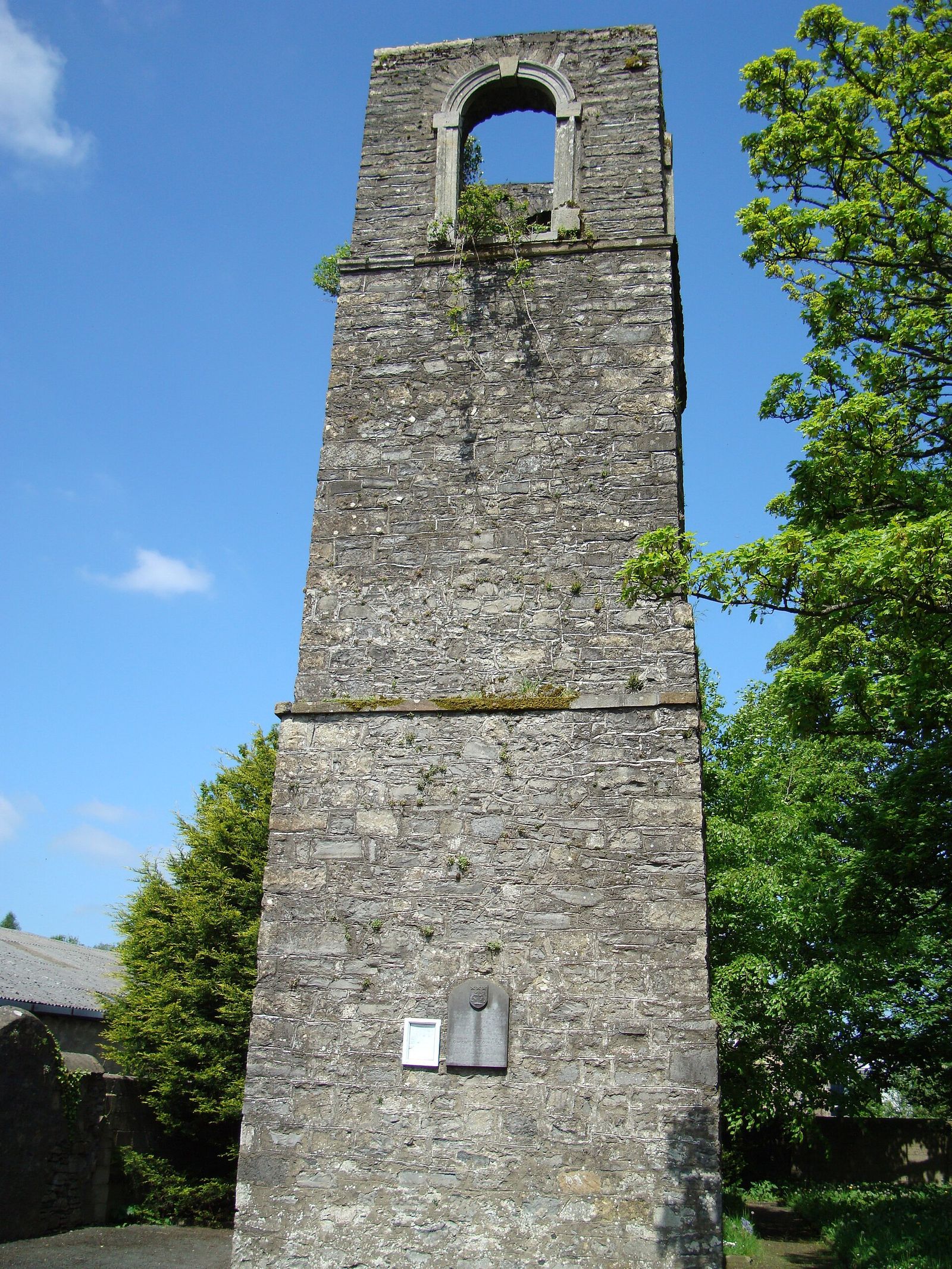
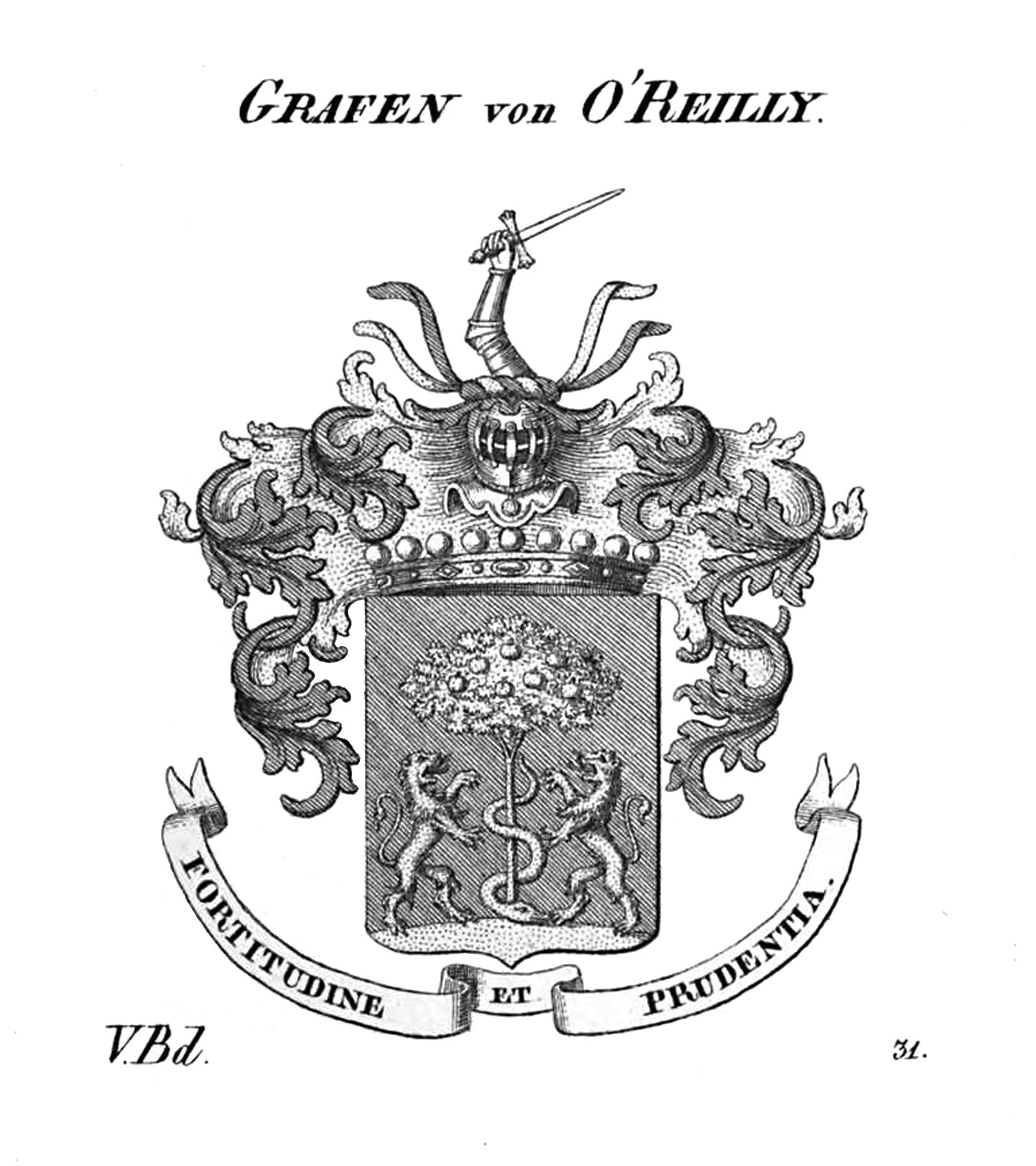
The kingdom lasted until the early seventeenth century and then stopped existing, which we will come to. In the meantime the family got about. One branch ended up in Spain and produced Alejandro O’Reilly, second Spanish governor of colonial Louisiana, and a Spanish title, Conde de O’Reilly. There is something pleasing about a family from a bog in Ulster ending up with a count in it. Reilly and O’Reilly are now among the most common surnames in Ireland, ranked around tenth or eleventh depending on the year you ask, and the O’Reilly crest still sits on the arms of County Cavan. There is also a long-running argument between the O’Reilly and O’Rourke camps over the title Prince of Breifne, which the Chief Herald settled in the O’Rourkes’ favour in 1994; the office stopped granting courtesy titles to Gaelic chiefs in 2003, which at least stopped the phone ringing.
The Bradys, who were everywhere and useful
If the O’Reillys were the crown, the Bradys were the engine. They are described as the most prominent clan in the kingdom alongside the O’Reillys, and the two names are the most common in the county today. They were not merely numerous. Documents record the O’Reillys granting MacBrady contracts to build windmills, put up houses and pave the streets of Cavan town, so when you walk around the town centre you are walking on Brady work. They supplied bishops to Kilmore as well, and they had enough castles to make an impression, at least until a reported attack in the 1590s destroyed all but two of them.
I went through the Brady side of this separately, including where the name comes from, the Breifne connection and the records worth chasing, so I will not repeat it here.
The McKiernans, who got a barony out of it
The McKiernans are Mag Tighearnan, son of Tighearnan, and they are one of the few great Cavan families who never pretended to be kings of anything larger than their own ground. The name descends from a Tighearnan who lived about 1100, who was in turn descended from the eighth-century Dunchadh. Dunchadh is the important one, because he gave his name to Teallach Dunchadha, the hearth of Dunchadh, which became the barony of Tullyhunco. That is the modern civil parishes of Kildallan, Killeshandra and Scrabby, and it means the family has had the same patch for roughly nine hundred years.
Chiefs of the clan are listed from about 1080 onward, and the list reads like a rota. One of them, Sithric Carrach-in-Cairn, held the job in 1290 and had it for a year. Dunchadh’s brother was Eochaidh, from whom the neighbouring McGoverns descend, which means two of Cavan’s main septs are two branches of one eighth-century family who divided the county between them and then spent the next eight hundred years arguing across the boundary.
Spelling is where the McKiernans become a public service announcement. The Mag element can appear as Mag, Meg, Mac, Mec, Mc, Ma or a bare apostrophe, and the rest of the name has been written down as Tighearnan, Thighearnan, Cighearnan, McKiernan, McKernan, McKernon, McKernin, McKeirnan, McKiernen, McKyernan, McTiernan, McTernan, MacKiernan, MacTernan, Kiernan, Kernan and Tiernan, among others. If you are searching records and only looking for one spelling, you are looking for a fraction of your own family.
In 1584, when Perrot divided the county, the McKiernans kept Tullyhunco, subject to the administration in Dublin but independent of the O’Reillys. Remember that they had attacked an O’Reilly king’s house three centuries earlier. Getting their own barony out of the settlement is not a bad return.
The McGoverns, who have the best nicknames
The McGoverns are Mag Samhradhain, from Samhradhan, another chief of about 1100, descended from the seventh-century Eochaidh who gave his name to Teallach Eochaid, Tullyhaw, which is the county’s northwestern panhandle and the part of Cavan that people from Cavan describe with a slight pause. Their strongholds were at Ballymagauran, which is Baile Mhic Shamhrain, the town of Mac Shamhrain, and at Bawnboy, Coologe and Lissanover.
The McGovern chiefly list is the longest and by far the most entertaining in the county. It runs from Eochaidh in the seventh century down to the end of the seventeenth, and the annals did not record these men by number. They recorded them by what everyone actually called them. There is Domhnall Bernach, Donal the Gap-Toothed, who was chief from February 1495 until his death in February 1496. There is Maghnus Ruadh, red-haired, and Brian Breaghach, and Tomas Og na Fesoige, young Tomas of the beard. A chief with a nickname is a man who has been described to his face by his own neighbours, and the annals simply wrote it down.
They have the same spelling problem as the McKiernans, in a different key. Alongside McGovern you will find Magauran, Maguaran, McGurran, McGurn and Magoveran, and the second half of the name has been rendered as Goveran, Govran, Gawran, Gawrain, Gauran, Gaurin, Gouran, Gurn, Gurren, Guran and Gowran, among others. Census takers and parish clerks did their best. Their best was not consistent.
Like the McKiernans, the McGoverns came out of the 1584 settlement with their own territory, Tullyhaw, on the ancient tenures, owing their allegiance to nobody in Cavan town. Their last recognised chief, Colonel Bryan Magauran, held the title at the very end of the seventeenth century, by which point the office meant something rather different to what it had meant in 1250.
Everybody else, briefly
A full list of the septs recorded in the old east of Breifne is longer than this article needs to be, but the supporting cast is worth a paragraph, partly because one of them is probably your family.
There were military families, who did the actual fighting. Mac Gabhann, anglicised Smith or McGowan or Smyth, came originally out of Ulaid and hired out as soldiers. Mac Caba, McCabe, were Hiberno-Scottish gallowglass who for centuries supplied mercenaries to Cavan, Monaghan and Fermanagh. O Faircheallaigh, Farrelly, were a military clan based in Loughtee Lower. There were bardic families, who did the remembering: O Dalaigh were famous poets found at royal courts across Ireland, and O Maolagain, Mulligan, were bards to the O’Reillys specifically, which meant they were the ones who decided what the O’Reillys would be remembered for. There were church families, like O Sioradain, Sheridan, erenaghs of Granard in Longford who served the O’Reillys in Cavan, and whose diaspora later produced Philip Sheridan, the American Civil War general whose parents left Killinkere, near Virginia, around 1830. There were also newcomers who simply arrived and stayed: Mac Shiomoin, Fitzsimons, an Anglo-Norman family, one of whom fell out with his own people and came looking for the patronage of King Tomas Mor, who gave him land in return for service as a secretary; de Lench, Lynch; de Fae, Fay or Fee or Fahy; Mac Giollagain, Gilligan, from Scotland; Mac Maghnais, MacManus, from the Norse name Magnus.
One warning about names before we go on, because it catches people every year. There was a branch of the O’Reilly sept known in Cavan as Clan Mahon. That is not the same family as the MacMahons, Mac Mathghamhna, of Oriel, who are a different clan from a different kingdom with a different set of grievances. If your Cavan family calls itself Clan Mahon and your Monaghan neighbour is a MacMahon, you may share a spelling and nothing else. The same confusion waits in Monaghan, where the McQuillans have their own separate story.
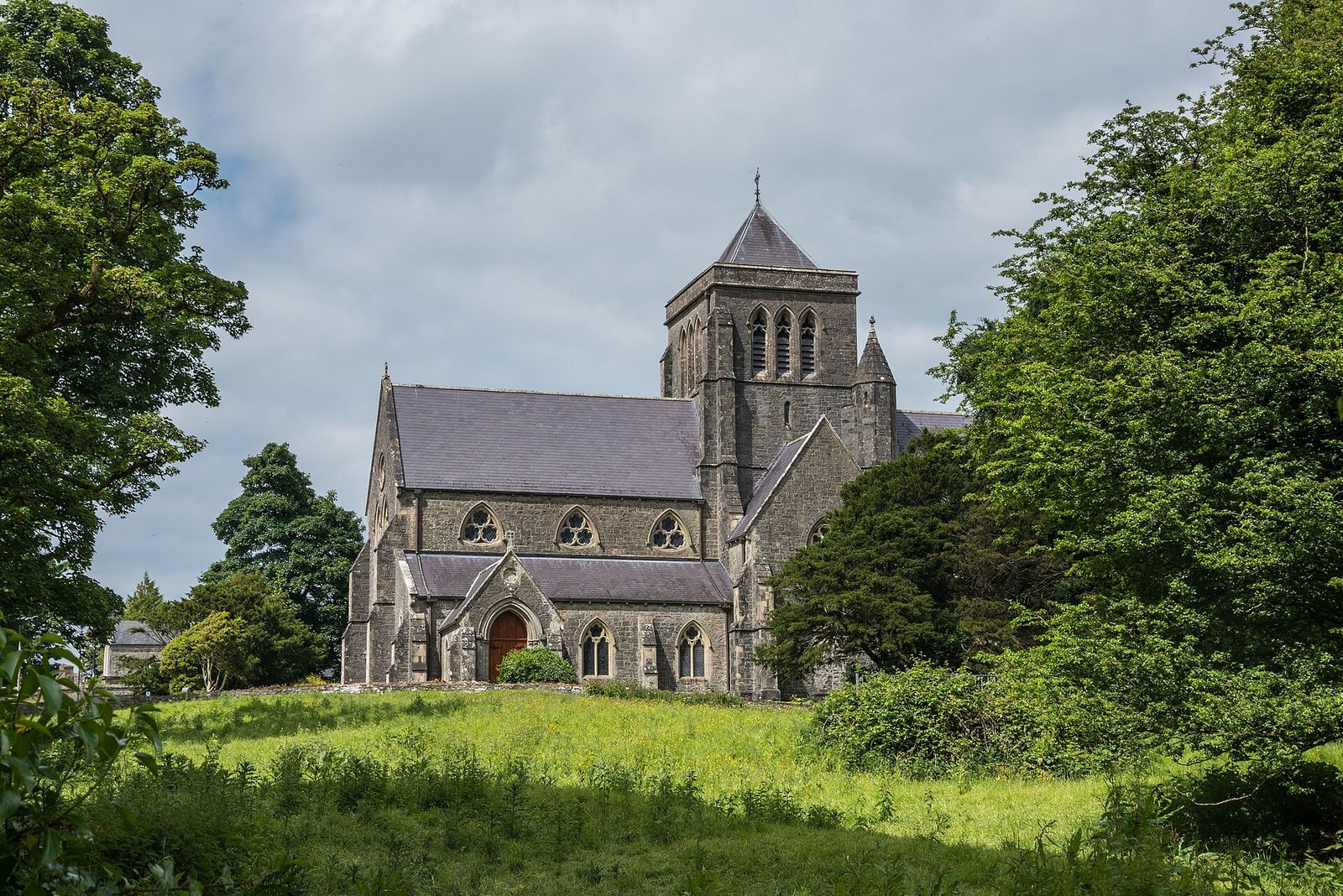
It is worth saying here that the church was not a side issue. The old territory of Breifne more or less was the Diocese of Kilmore, and the leading clans provided its bishops the way other families provided soldiers. Patronage of monasteries and churches was how a king’s reputation was built, and the monasteries were used as burial grounds for centuries afterwards. That is why a graveyard, and a list of who is buried in it, is often the single most useful document a Cavan family has.
Then the newcomers arrived
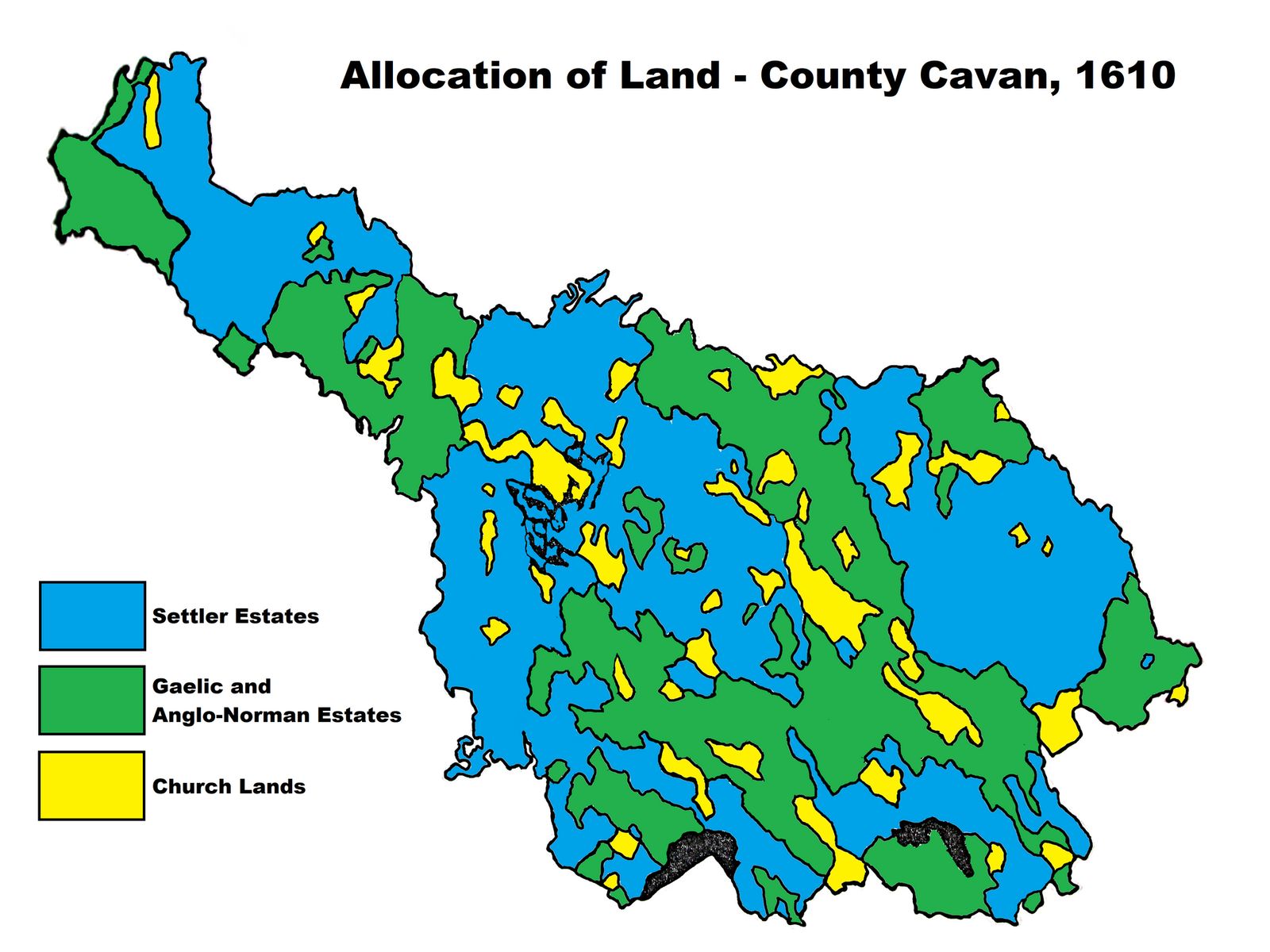
The Gaelic order in Cavan did not collapse in battle. It collapsed in paperwork. After the Flight of the Earls in 1607 the departing nobles were treated as having broken their oaths to the Crown, attainted, and had their lands confiscated, which began the Plantation of Ulster. Cavan was the first place the Lord Deputy, Chichester, visited, on the reasoning that its people had long dealt with Dublin and were therefore more pliant than the rest of Ulster. By the time it was done, about 64 per cent of the county’s roughly half a million acres had been allocated to settlers.
The O’Reillys were not wiped out, and that is part of the story. Fifty-two of the lower members of the clan were attainted, but some kept land: the acting chief, Maolmhordha, sought a pardon and was granted 2,000 acres, while Mulmory, grandson of Sir John O’Reilly, got 3,000 acres along with smaller estates that contained ancestral homes. In 1610 Chichester ordered that the castle on Tullymongan Hill, seat of the O’Reilly kings for over two centuries, be seized and handed to an English family. It was never done. The castle had been ruined during the war and was later demolished, which is a quieter ending than confiscation and somehow worse.
A list published in Duffy’s Hibernian Magazine in 1861 shows six specific O’Reilly grantees and their acreages, and includes a line that must have been a small revenge on the part of whoever wrote the report: it notes next to more than one grant that all his tenants do plough by the tail. Ploughing by the tail, attaching the plough to a horse’s tail rather than to a harness, was one of the practices the administration spent decades trying to stamp out on grounds of cruelty. Writing it into the record of who got the land was a way of noting what kind of landlord had been handed the county.
The planted towns are where the change becomes visible. Virginia was patented in August 1612 to an English adventurer named John Ridgeway, on a site where a ruined O’Reilly castle stood, and he was required to bring in English settlers and build a borough. He could not get anyone to come, and built a few wooden cabins and a corn mill instead. The patent passed to Captain Hugh Culme, who moved the whole town to a better site and then gave up as well. In 1622 it went to the Plunketts, and the Anglican Bishop of Kilmore, William Bedell, was brought in to lay the town out properly. Then the 1641 rebellion and the wars arrived, and the castle was destroyed by government forces in 1642 along with the town’s stocks of hay, corn and turf. Hearth tax records from the 1660s show what was left, which was not much. By 1727 there was an inn there run by a Cornelius Donnellan, and it was frequented during his trips to Cavan by Jonathan Swift. The estate was sold around 1750 to pay debts and passed to the Taylours, who finally made a go of it: rents went from twenty pence an acre to fifteen shillings, the population doubled between 1821 and 1841, and the main street you see today is largely their work.
Cootehill is more cheerful about it. The name is a portmanteau of two family names, Coote and Hill, from the marriage of Thomas Coote and Frances Hill in the early 1700s, which is a rare case of a town being named after a wedding. Thomas Coote obtained a charter for markets and fairs in 1725, and Bellamont Forest was built between 1725 and 1730 for a later Thomas Coote, designed by his own nephew, Edward Lovett Pearce, who also designed the former Houses of Parliament in Dublin, now the Bank of Ireland. An 1844 description of the town allowed that it was comparatively well built and respectively inhabited and was not equalled in appearance by any place between it and Dublin except Navan. In 1872 a branch of the International Workingmen’s Association, the First International, was founded in Cootehill, which is one of the least expected sentences in the history of an Ulster market town.
What you can actually prove about your own family
Here is the part that separates the enjoyable version of this from the accurate one. Everyone in Cavan is descended from chieftains, according to their family story, and the family stories cannot all be right, because there were not that many chieftains and there are an awful lot of people.
The annals are full of kings and empty of everybody else. They record the deaths of lords and the sackings of monasteries and they do not record the births of farmers, which is what the overwhelming majority of your ancestors were. So the honest expectation, if you start digging, is that you will trace back through the nineteenth century to a tenant farmer in a townland, and then hit a wall, and the wall is not a failure of your research. It is the shape of the records.
The practical order of attack is this. Start with the townland rather than the surname, because a surname is shared by thousands of people and a townland narrows it to a handful; I wrote about how those work and why they matter already. Griffith’s Valuation, completed in 1868, is the backbone document, because it lists occupiers by townland and parish and gives you a location to search around. Before that you have parish registers, which are patchy and dependent on which denomination and which parish; the National Library of Ireland has put many of the Catholic ones online free. Civil registration gives you births, marriages and deaths, but only from 1864, and from 1845 for non-Catholic marriages. The Placenames Database of Ireland will tell you what the name of the place actually means, which is often a more reliable guide to what happened there than anyone’s family tradition. The annals, in translation, are free to read in the Corpus of Electronic Texts at University College Cork, and if your family were anyone important in the fourteenth century, they are in there.
The only tool that answers the question of descent directly is Y-DNA testing, and it frequently answers it in a way the family will not enjoy. Two men called O’Reilly from the same parish are quite often not related in the male line at all. That is not a scandal. It is what happens when a surname is adopted for convenience, taken from a landlord, or anglicised out of a completely different name, over four hundred years.
If you want to go and stand on the ground
Most of the medieval Cavan of the clans is gone, but the pieces that survive are the right pieces, and they are all within a short drive of each other.
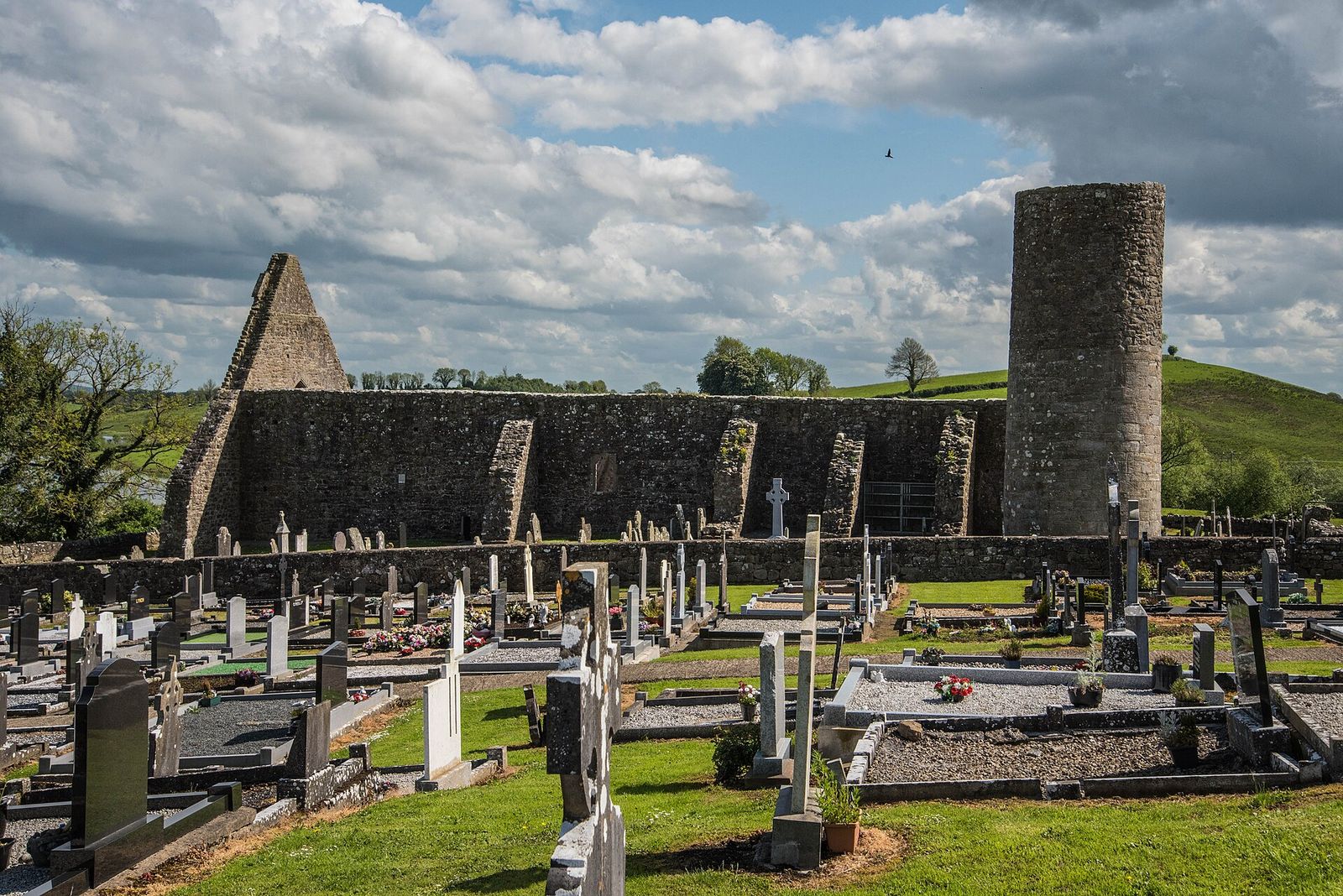
Cloughoughter is the best of them, and you can see it from the road, though getting onto the island means a kayak and a reasonable day. The friary tower in Cavan town is a five-minute walk from the main street and is easy to miss, which is a mistake worth not making. Drumlane, with its round tower standing over a graveyard beside the water, is the sort of place where a family history stops being an abstraction and starts being a Saturday afternoon. Kilmore Cathedral has the grave of Bishop Bedell, who was held at Cloughoughter and died within days of his release in February 1642. The baronies map in your head becomes a real thing once you have driven them. If you are staying over, the lakes are the reason to take the long way home.
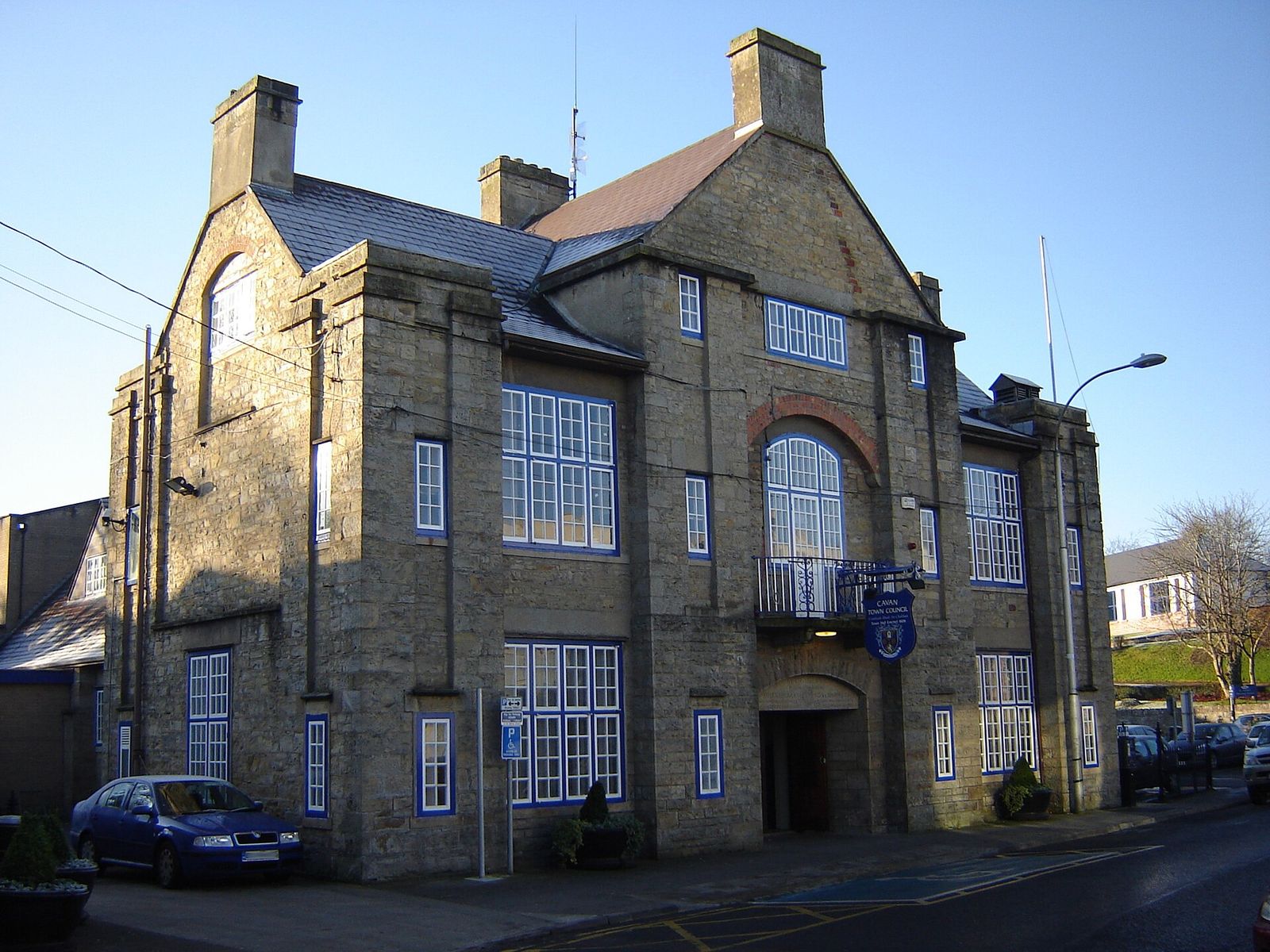
Cavan town itself is where all of this lands, and it is a fair bit more comfortable now than it was when Philip O’Reilly was on the oats and water. The friary, the town hall on Market Street and the old market square are all within a few hundred yards of each other, and the county museum will fill in the rest if it is raining, which it may well be. When you are done, we are in Cavan town ourselves, behind the Black Horse on Church Street, and the menu runs from the sourdough pizza to the smash burgers, with a reasonable wine list and a kitchen that stays open late enough to be useful. Takeaway and directions are on the site. It is a good deal more forgiving than a sheaf of oats.
Half the county shares about six surnames, which means that the next person who tells you they are descended from the O’Reilly kings may well be telling the truth, and the person who assures you they are not related to you at all is almost certainly wrong. That is the clan system in one sentence. Nobody ever left, and nobody ever forgot who had the good land.
Further reading
Sources for the historical detail above, all free to use: