The O’Reilly Clan of Cavan: Kings, Feuds and a Castle on a Lake
If your surname is O’Reilly, or Reilly, or Riley, you are carrying the name of a family that ruled a county for something like three hundred and fifty years. You are also carrying the name of a family that spent an extraordinary amount of that time fighting itself, which may go some way towards explaining a few things about family gatherings.
O’Reilly is one of the commonest surnames in Ireland, sitting around tenth or eleventh depending on which year you ask and which list you trust. It got that way for a plain reason. For centuries this was the family that held the good land in Cavan, and everyone around them ended up working for them, marrying them, or being named after them by a clerk who had given up on spelling.
Where they came from
The O’Reillys come out of the Ui Briuin, a kindred that settled the east of Breifne in the eighth century. At some point they split off from the wider family and became known as Muintir Maelmordha, after a chief of that name who lived in the ninth century. They did not take a fixed surname until the early eleventh, when they became O Raghallaigh, descendants of Raghallach, a chieftain who is traditionally said to have died at the Battle of Clontarf in 1014.
For the first two hundred years of their recorded existence they were not the people in charge. They turn up in the annals for the first time in 1126, as a clan holding a small territory called Machaire Gailenga around Lough Ramor, and holding it as vassals of the O’Rourkes, who were the kings of Breifne and who did not treat their underlings gently. The O’Reillys spent most of the twelfth century being pushed around by a family they could not beat, which is the wider picture I sketched out here. They remembered it.
Learning to pick the right side
The first recorded O’Reilly rebellion went badly. In 1154, while the O’Rourke king Tighernan Mor was occupied with a war against Leinster over the abduction of his wife, a chief called Geofraidh O’Reilly took his chance and rose up. He lost, and was banished from the kingdom. The next year he ambushed a Breifne guard detail and rescued Donnchad Ua Cerbaill, king of Airgialla, who was being carried off as a prisoner. That went considerably better. He was captured later and executed for it, which is the sort of outcome that teaches a family to think about timing. The Bradys did the opposite and got castles out of it.
What the O’Reillys learned instead was the value of a well-chosen ally. When the Normans arrived, the family looked at the situation and worked out that the quickest route out from under the O’Rourkes was to help the people who were invading the O’Rourke kingdom. It was not a romantic decision and it was an extremely effective one. During the Siege of Dublin, the O’Rourke king was encamped outside the walls with his Gaelic allies. The O’Reilly king was inside, aligned with Strongbow, comparing notes.
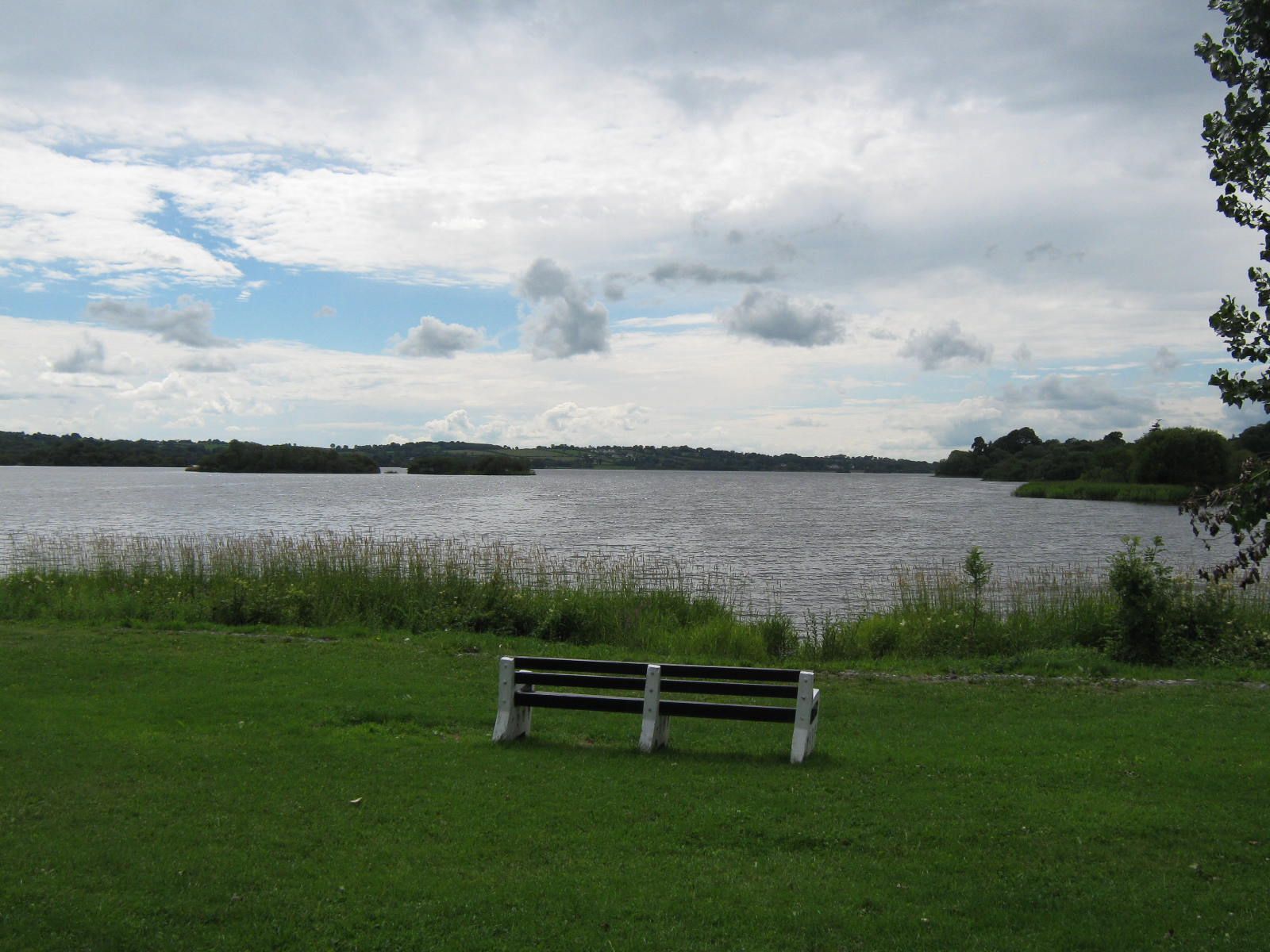
It worked. Cathal O’Reilly knocked down the de Lacy castle at Kilmore in 1226 and killed the O’Rourke king’s son Aodh at Lough Allen. When the de Lacys overreached and Henry III sent William Marshal to Ireland to put them down, the O’Reillys joined the campaign on the Crown’s side, and after a short siege they retook the castle on the stony island in Lough Oughter, finishing the work in 1233. That castle was Cloughoughter, and the family held it, on and off, for the next three hundred and fifty years.
1256: the year Cavan became a county in waiting
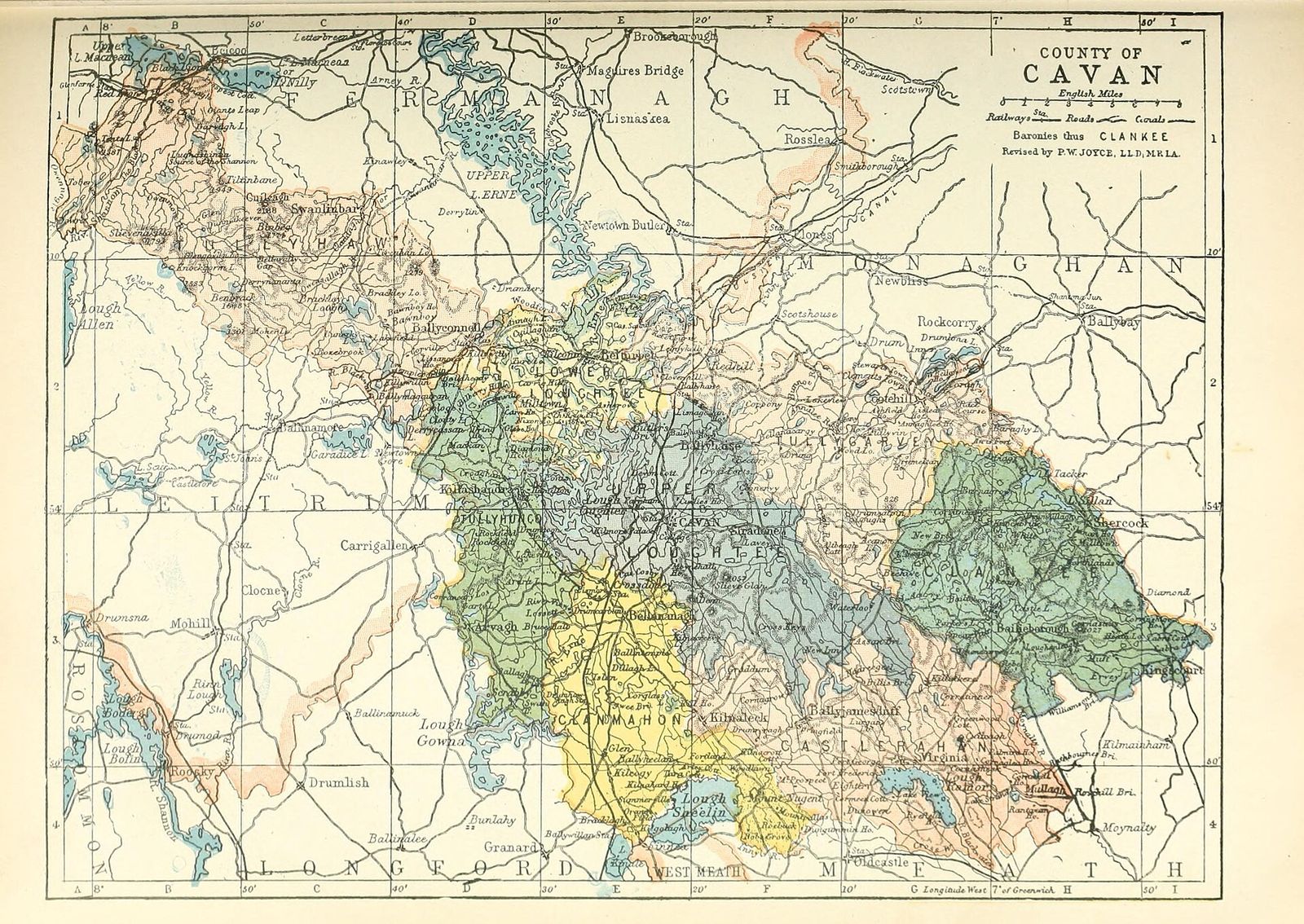
Everything turned at the Battle of Magh Slecht in 1256. The O’Reillys and the O’Rourkes settled the argument in the field, and the O’Reillys lost both of their leading men, Cathal and Cuchonnacht, along with fourteen other nobles of the sept. Connacht and the O’Rourkes won the battle. But the war had gone on for so long, and cost so much, that the kingdom of Breifne broke in two along the line nobody could hold. The west went to the O’Rourkes and became Leitrim. The east went to the O’Reillys and became Cavan.
The split held because everyone was too exhausted to undo it. Connacht made one more attempt, installing Conchobar O’Reilly as head of the clan, and he died the following year. His successor, Matha, took one look at the arrangement and immediately broke off relations with Connacht. The O’Connors were by then busy losing their own kingdom to the de Burghs, and they never got another chance to interfere.
Moving house, founding a town
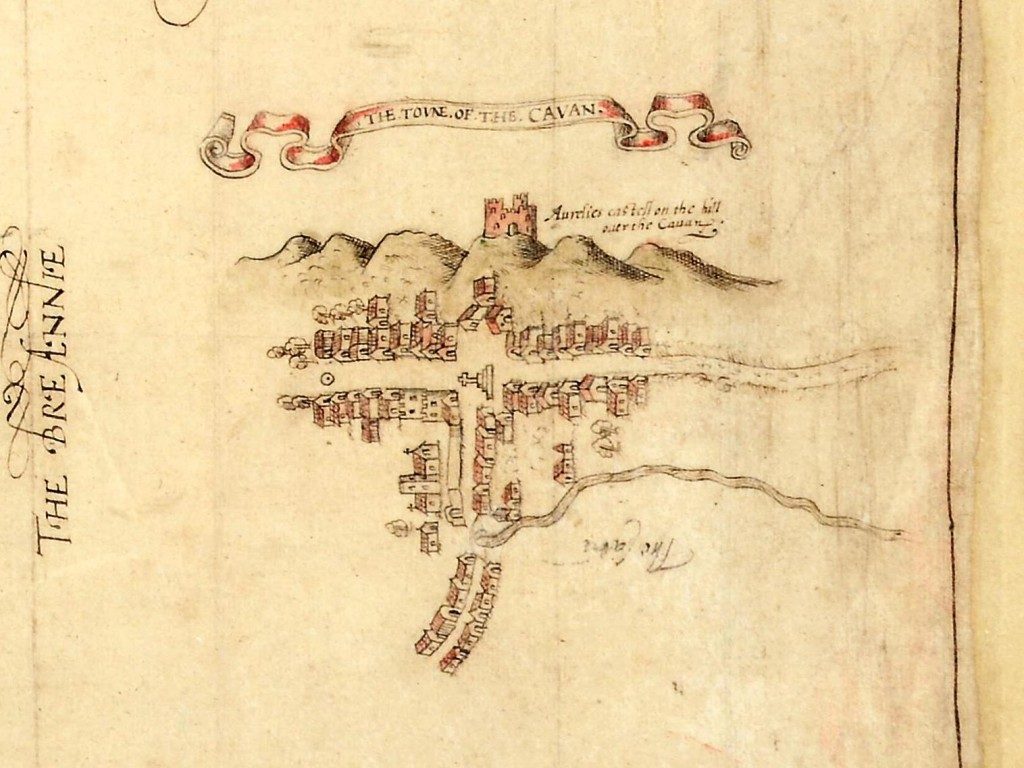
The 1280s delivered the sort of lesson the O’Reillys kept having to learn. King Ferghal was attacked at his own residence by a combined force of McKiernans from Tullyhunco and McGoverns from Tullyhaw, the two families who between them held the western side of the county. He survived, moved east, and built a new castle on Tullymongan Hill. It stayed the seat of the O’Reilly kings for over two hundred years, and it is the reason Cavan town is where it is rather than somewhere more convenient.
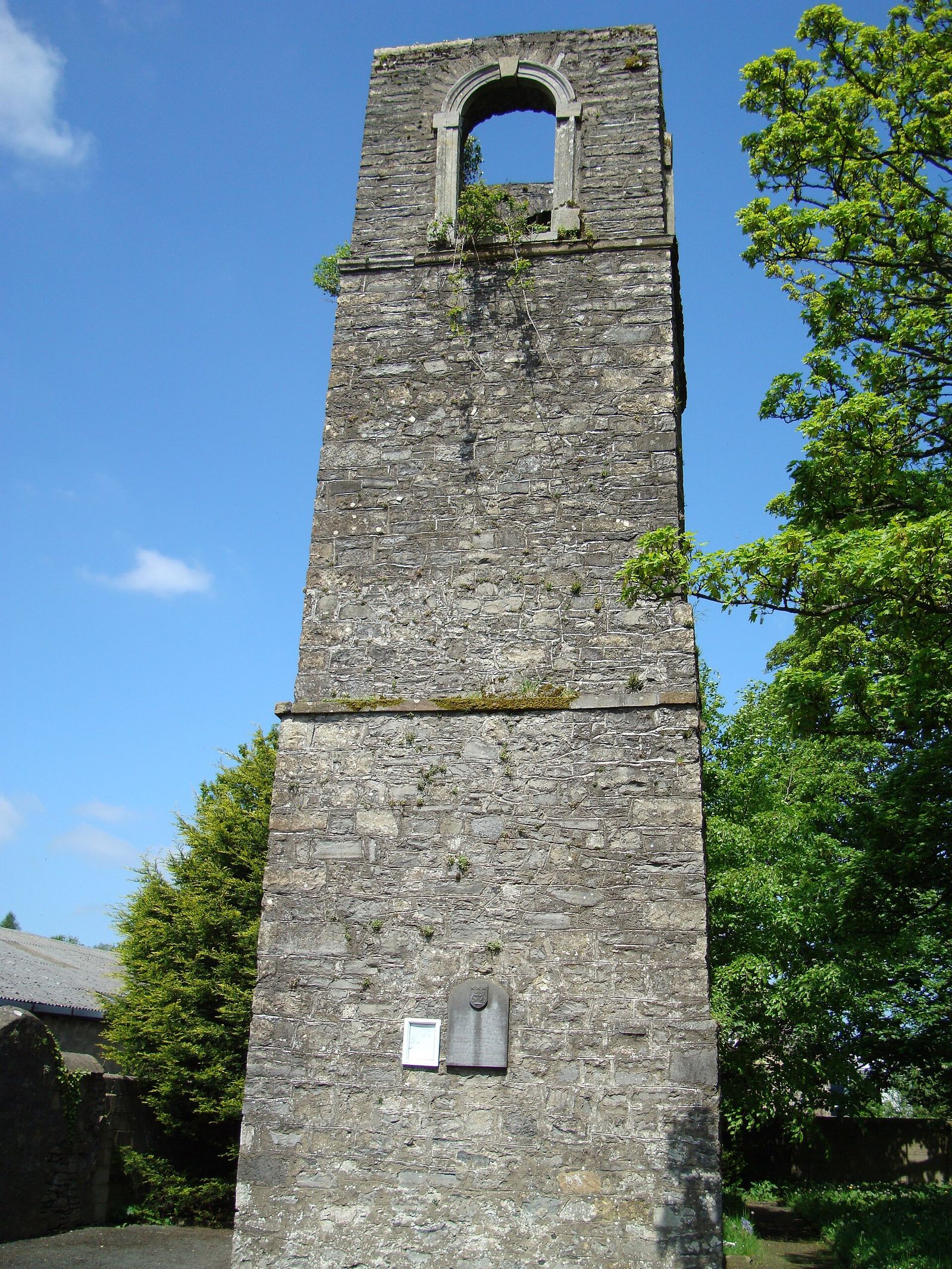
His successor was the most consequential O’Reilly of the medieval period. Giolla Iosa Ruaidh ruled from 1293 until about 1327 and appears to have had a better grasp of the long game than anyone around him. A settlement grew below the castle, and that settlement became Cavan town. It took its name from the ground rather than from him. An Cabhan means the hollow, and the town sits in one, between drumlins.
He also founded the Franciscan friary, and when he had had enough of ruling he retired into it around 1327. He had thirteen sons, which is one way to secure a succession and also one way to guarantee a certain amount of arguing. The eldest, Maelseachleann, died in 1328 and was described as king in his death notice. The second, Risdeard, took the kingship, and for a while the family managed something it would rarely manage again, handing power over peacefully three generations running. Risdeard died, his brother Cu Chonnacht became king, and Cu Chonnacht retired in 1365 and passed the title to his brother Pilib.
The bishop, the oats and the water
Pilib’s reign produced the story that has outlived everything else about him. On taking power he turned his attention to the Bishop of Kilmore, Riocard O’Reilly, who was his own nephew. Complaints had already reached Armagh about the bishop’s conduct, which included harsh treatment of the clergy and a relationship with his first cousin. Pilib dealt with the matter in the manner of a man who regarded church land as family land, and simply seized the bishop’s lands and revenues. Armagh was a long way away and in no position to argue.
He was briefly overthrown in 1369 and imprisoned, and the record of that imprisonment has survived with unusual precision. He was allowed nothing, the account runs, save a sheaf of oats for day and night and a cup of water, so that he was compelled to drink his own urine. It is a sentence that has outlived every political achievement of every O’Reilly who ever lived, and there is a lesson in that for anybody in public life.
A family that could not stop
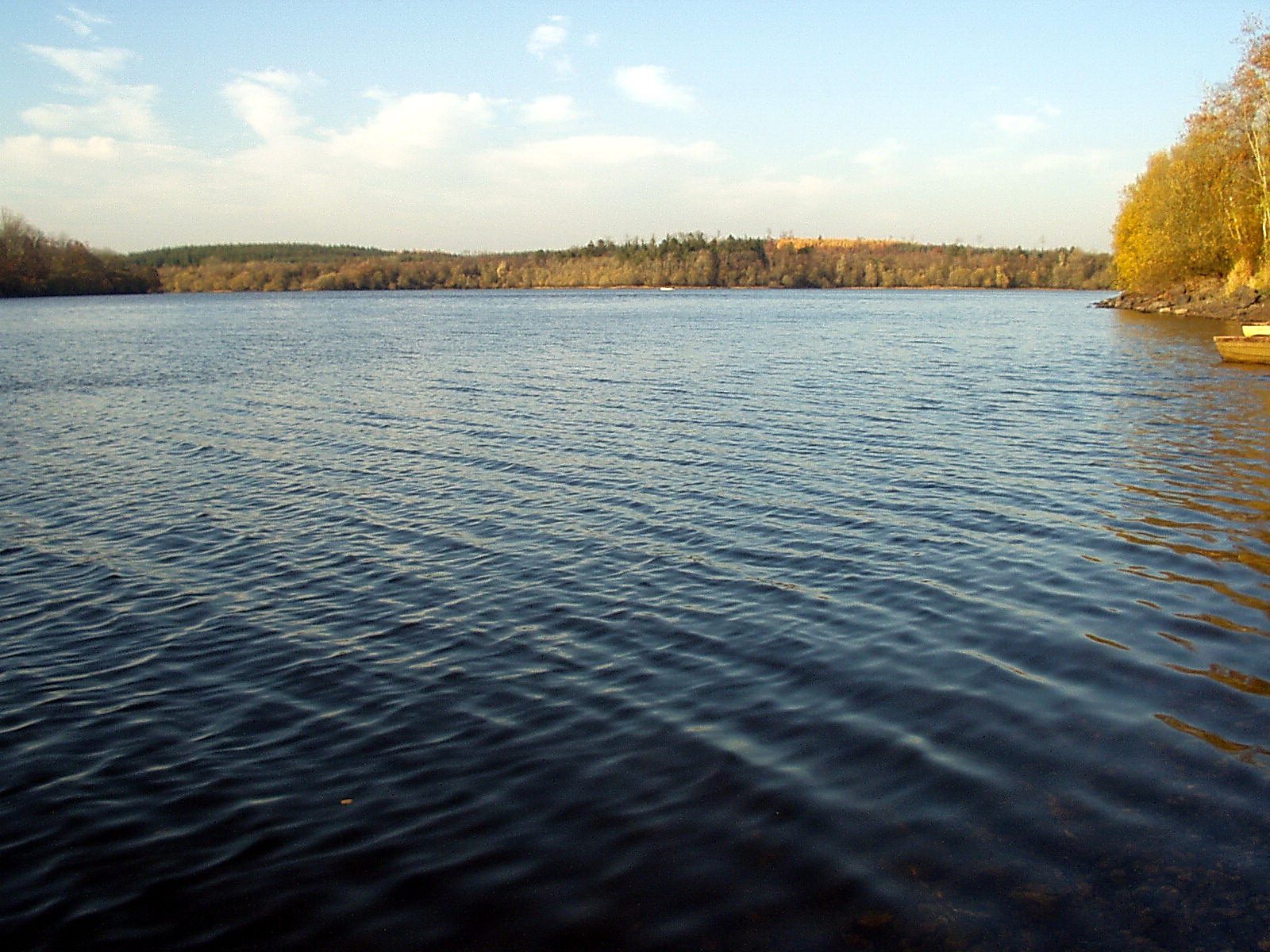
The fifteenth century is where the O’Reilly talent for internal warfare becomes the main event. The kingship passed back and forth between branches of the sept. Maelmordha, on taking power, ordered the assassination of one of the O’Rourke king’s sons in revenge for an opportunistic invasion, and banished a rival called Eoghan na Feosaige from the kingdom. The sept then elected Risdeard, son of King Tomas, who ruled for seven comparatively uneventful years before drowning on Lough Sheelin along with his son and several others. His wife Finnuala survived, and swam to safety. With no suitable heirs left standing, the nobles did the thing they must have hated, and recalled Eoghan na Feosaige, who took the kingship in 1418.
His reign ran straight into the Clan Mahon Rebellion. Clan Mahon was a branch of the O’Reillys, and two of its chiefs were brothers, Sean and Fearghal. Sean backed Eoghan. Fearghal had decided he was the rightful king of East Breifne, spent several years building support, and then killed his own brother to secure control of the branch. In 1427 he launched a full rebellion, with the McCabes, the O’Rourke king of West Breifne and the Lord Chancellor of Ireland behind him. Eoghan’s forces were routed, and in 1429 Fearghal and Talbot captured and burned Cavan town.
That was the moment East Breifne stopped being a Connacht kingdom. Eoghan, out of options, left his own kingdom and asked Eoghan O’Neill, King of Tyrone, for help. O’Neill was delighted at the invitation, marched south with his allies, and met the rebels in a battle that destroyed Fearghal’s army. The O’Reillys won, the rebellion collapsed, and Cavan spent the rest of its independent existence looking north to Ulster instead of west to Connacht. A family argument decided which province the county would belong to, which is a very Cavan way of settling a question of national geography.
The last century, and the paperwork
The sixteenth century brought the English back, and this time they arrived with lawyers. Maolmordha O’Reilly was inaugurated in 1534 in the middle of the FitzGerald Rebellion and had to fight to make his own position stick. The family instincts had not changed. When the Geraldine League threatened, the O’Reillys sided with the English, and after the league was broken at Lake Bellahoe in Monaghan the kingdom was regarded as one of the most dependable crown allies in Ireland.
Maolmordha then did something that looked shrewd at the time. In 1541 he travelled to the parliament in Dublin, took the oath of allegiance, and began the process of surrendering his lands so that they could be granted back to him as an English lordship. Surrender and regrant was how a Gaelic lord secured his title in English law, and Maolmordha threw himself into it, arranging a meeting between the Lord Deputy and Manus O’Donnell in Cavan in 1541 and sending soldiers to accompany Henry VIII’s expedition into France in 1544. Cooperating, he reasoned, was how you kept what you had.
Forty years later the bill arrived. By the 1580s Sir John O’Reilly could not control his own sept, with rivals inside the family challenging him openly, and the Lord Deputy, John Perrot, decided the O’Reilly lordship should be divided permanently. He and O’Reilly toured the county for over a year, mapping boundaries. In 1584 they signed a composition which, in exchange for a fixed annual rent and a considerable amount of land, abolished the O’Reilly chieftaincy itself, revoked the family’s claim to be overlords of the other clans and ceded ground to O’Reilly’s own internal rivals. The office of High Sheriff, which had always been held by an O’Reilly, was given to a man from Meath. In 1585 two O’Reillys, Pilib and Emon, became the first members of parliament to represent Cavan. The family had traded a kingship for a seat.
Losing, twice, on principle
The Nine Years’ War finished what the composition started. Cavan was devastated, and a reported attack in the 1590s destroyed all but two of the MacBrady castles in the county. After the Flight of the Earls in 1607 and the plantation that followed, roughly 64 per cent of the county’s half million acres was allocated to settlers, and fifty-two of the lower ranks of the O’Reilly clan were attainted. Some kept their land: Mulmory, grandson of Sir John O’Reilly, was granted 3,000 acres, and the acting chief, Maolmhordha, who had sought a pardon, was granted 2,000.
In 1610 the Lord Deputy ordered that the castle on Tullymongan Hill, seat of the kings for over two hundred years, be seized and handed to an English family. The order was never carried out. The castle had been ruined during the war and was later demolished, so the O’Reillys lost the site anyway, quietly, to nobody in particular.
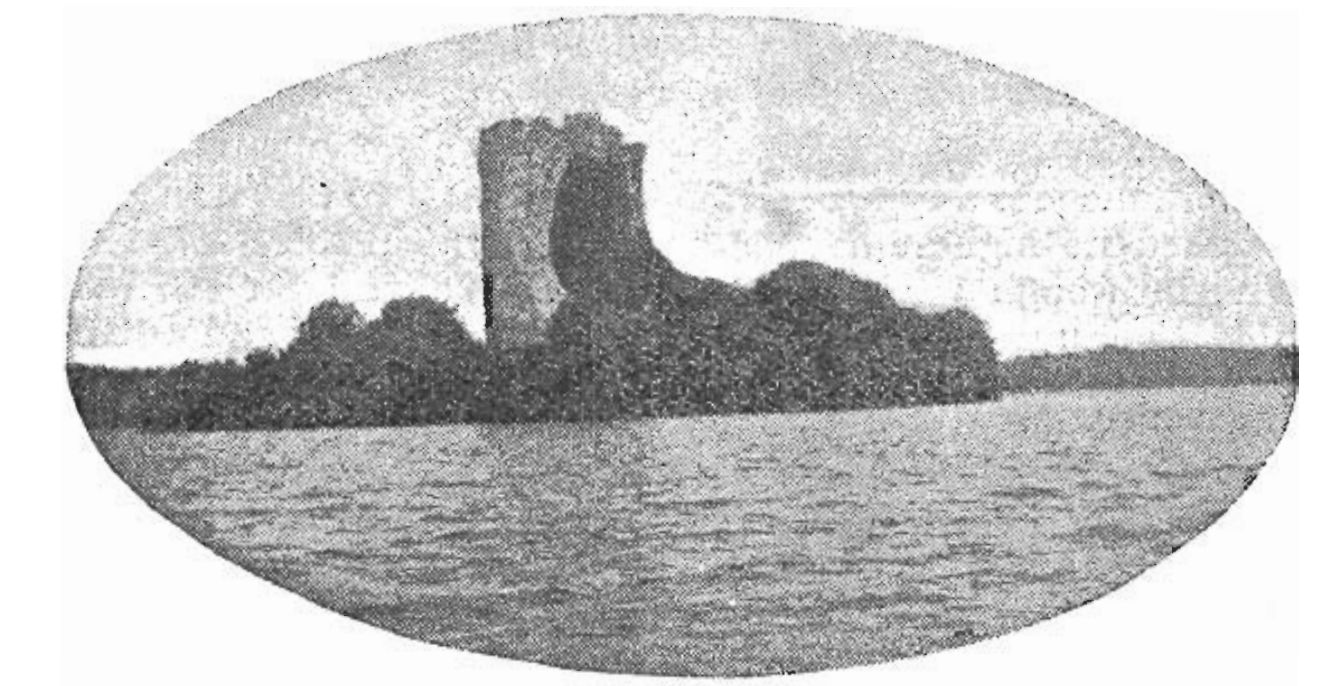
The family’s last great appearance was also a defeat. Philip O’Reilly, born in 1599, was MP for County Cavan from 1639 and became a leading figure in the 1641 Rebellion. He seized Cloughoughter Castle and held it. The castle became a prison, and among those held there was the Bishop of Kilmore, William Bedell, who died in February 1642 within days of his release, after an exceptionally cold winter. Owen Roe O’Neill, commander of the Ulster Army, is said to have died at the castle in 1649. In March 1653 Commonwealth forces under Sir Theophilus Jones set up artillery in the nearby townland and bombarded it, and Cloughoughter became the last major Confederate position in the country to surrender, on 27 April. The marks left by the cannon shot are on the walls to this day.
Forty years later two more O’Reillys were sitting in Dublin, in the Parliament of 1689. John Reyly, spelling aside, represented County Cavan, and Philip Og O’Reilly sat for Cavan borough. That parliament is remembered as the Patriot Parliament, and it was on the losing side as well. By then, being an O’Reilly had stopped being a career and become a habit.
Where the name went
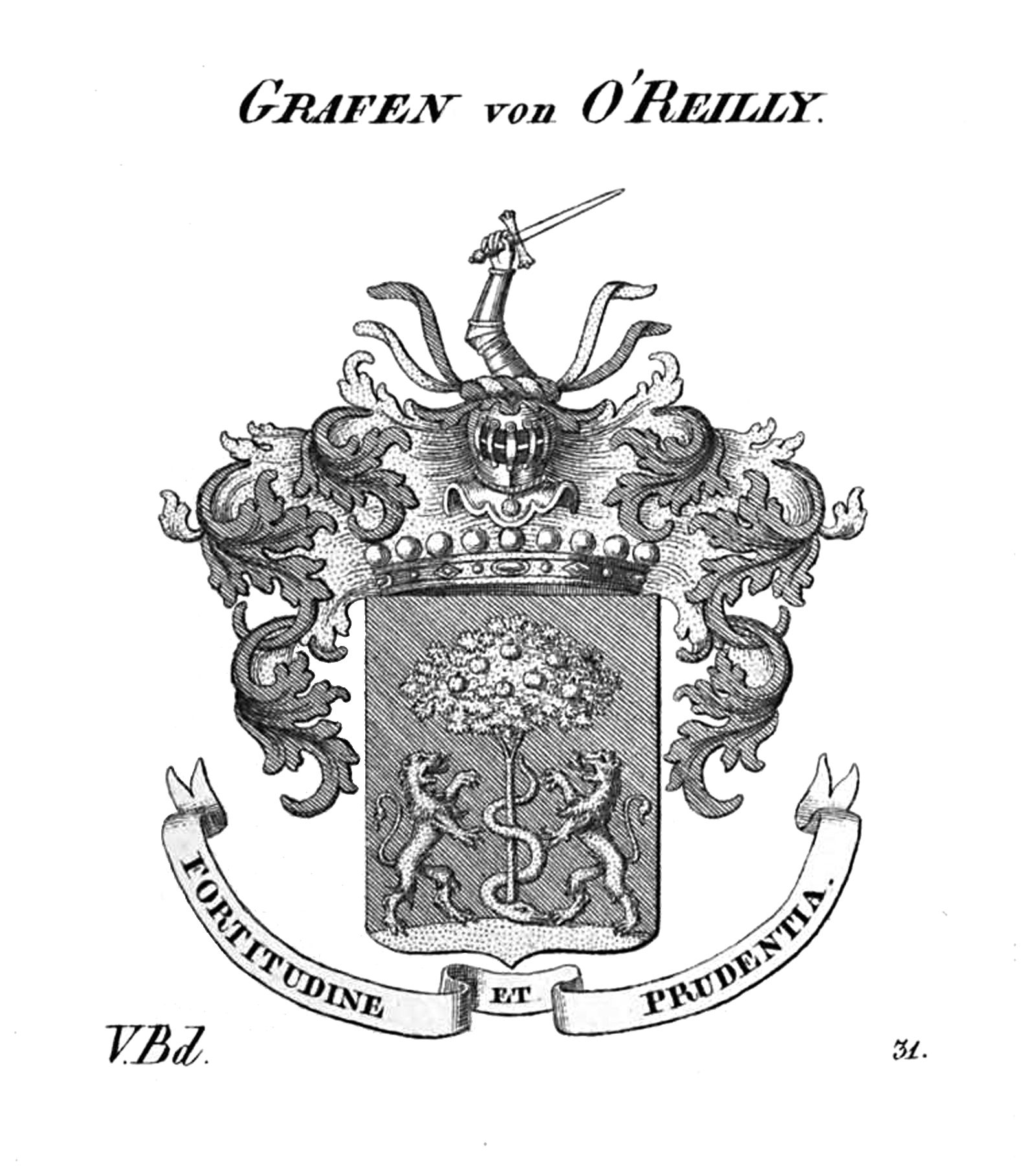
Ireland was not large enough, so some of them left. The most spectacular was Alejandro O’Reilly, born in Ireland in 1723 and taken to Spain as a child. He enlisted at eleven, distinguished himself, and in 1769 was sent to Louisiana at the head of an expeditionary force to restore Spanish control after a rebellion. He took the rebels’ submission, reorganised the colony, and was rewarded with a Spanish peerage as Count of O’Reilly. He also had certain rebels executed, which earned him the nickname Bloody O’Reilly, and his invasion of Algiers in 1775 was a serious defeat that briefly got him banished. He died in 1794 on his way to take command of the Spanish army against Revolutionary France. Not a bad run for a name out of a drumlin county.
Most O’Reillys did nothing so dramatic. They stayed and worked the land, or left for Liverpool, New York or Birmingham, and by 1890 the name was among the ten or eleven commonest in Ireland. It occupies roughly the same position now, which is a fair indication of how many of them there always were.
What this means if you are one of them
Everything above is the documented history of a dynasty. None of it is proof of your personal descent from it, and the gap between the two is where most family history goes wrong.
The annals are full of kings and empty of everybody else. They record the deaths of lords and the sackings of monasteries, and they do not record the births of farmers, which is what nearly all of your ancestors were. The realistic result of research is that you trace back through the nineteenth century to a tenant farmer in a townland and then hit a wall. That wall is not a failure of your research. It is the shape of the surviving record.
Start with the townland rather than the surname, because O’Reilly is shared by tens of thousands of people and a townland narrows it to a handful. Griffith’s Valuation, completed in 1868, is the backbone document, listing occupiers by townland and parish. Before that you have parish registers, which are patchy and depend entirely on which parish and which denomination; the National Library of Ireland has put many of the Catholic registers online free of charge. Civil registration covers births, marriages and deaths from 1864, and from 1845 for non-Catholic marriages. The Placenames Database will tell you what the name of the place actually means, which is often a more reliable guide to what happened there than any family tradition. The annals themselves are free to read in translation in the Corpus of Electronic Texts at University College Cork, and if your family were anybody important in the fourteenth century, they are in there, arguing.
The only tool that answers the question of descent directly is Y-DNA testing, and it regularly answers it in a way that nobody enjoys. Two men called O’Reilly from the same parish are frequently not related in the male line at all, and that is not a scandal. It is what happens to a surname over four hundred years of adoption, anglicisation and clerks writing down what they thought they heard.
Standing on the ground
Most of the medieval O’Reilly world is gone, but the surviving pieces are the right ones and they are close together.
Cloughoughter is the best of them, out on its island in Lough Oughter, visible from the shore and reachable by kayak on a reasonable day. Tullymongan Hill is inside Cavan town, and nothing of the castle remains, but the hill is there and it is a short walk from the main street, which is more than most displaced dynasties can offer. The friary tower that Giolla Iosa Ruaidh founded and retired into is also in the town, and easy to walk past without noticing, which is a mistake worth avoiding. Kilmore Cathedral holds the grave of Bishop Bedell, who was held at Cloughoughter and died within days of his release in February 1642.
Cavan town is where all of it lands, and it is a good deal more comfortable now than it was when Philip O’Reilly was on the oats and the cup of water. The friary, the town hall on Market Street and the old market square are within a few hundred yards of each other, and the county museum will fill in the rest if it is raining, which it very possibly will be. When you have finished, we are in the town ourselves, behind the Black Horse on Church Street, and the menu runs from the sourdough pizza to the smash burgers, with a kitchen that stays open late enough to be useful. The menu is on the site, directions are straightforward, and if you want to eat it at home there is takeaway.
Which brings us back to where we started. Half of Cavan appears to be related to the other half, and the O’Reillys are the reason. They arrived as vassals, took the county by playing both ends against the middle, spent three centuries arguing about which of them should be in charge, lost the whole thing to a lawyer with a map, and then turned up anyway, two hundred years later, on the county’s coat of arms. There are worse ways to be remembered.
Further reading
Sources for the detail above, all free to use: