The Brady Clan of Cavan: A Short History of a Very Prolific Surname
If you are a Brady — and given the population of Cavan and its diaspora, there’s a decent chance you are — then you belong to one of the most enduring family names in Irish history, and you probably have no idea where it came from. This is the short version, and it comes with the usual genealogist’s warning: the further back you go, the foggier it gets, and anyone who tells you otherwise is selling something.
The name itself is straightforward. It comes from the Irish Ó Brádaigh or Mac Brádaigh, which translates, depending on which dictionary you trust, as “spirited” or “broad”. Either meaning is acceptable, and both are accurate for a family that has produced more than its share of both qualities.
The kingdom they came from
The Bradys belong to the old Kingdom of Bréifne, the medieval overkingdom that covered what is now Cavan and Leitrim and bits of the neighbours. Bréifne was a confederation of clans under an overking, and over the centuries the big families sorted themselves out: the O’Rourkes in the west, the O’Reillys in the east, and the Bradys doing what the Bradys have always done, which is being everywhere and getting on with it.
After the Battle of Magh Slecht in 1256, Bréifne split into West Bréifne under the O’Rourkes and East Bréifne under the O’Reillys, and East Bréifne became, in time, County Cavan. So if you’re tracing a Cavan Brady, you’re tracing someone whose ancestors were in the east of the old kingdom, in the area that the O’Reillys ruled and everybody else filled in around.
Bishops, scholars, and the see of Kilmore
Here’s where the family history gets properly impressive. The diocese of Kilmore — the old see of Bréifne, approved at the synod of Kells in 1152 — was for centuries a distinctly Brady operation. In 1454, Pope Nicholas V was writing to Aindrias Mac Brádaigh, the bishop of Kilmore, which means a Brady was running the diocese in the 15th century, and plenty of his relatives followed him into the job.
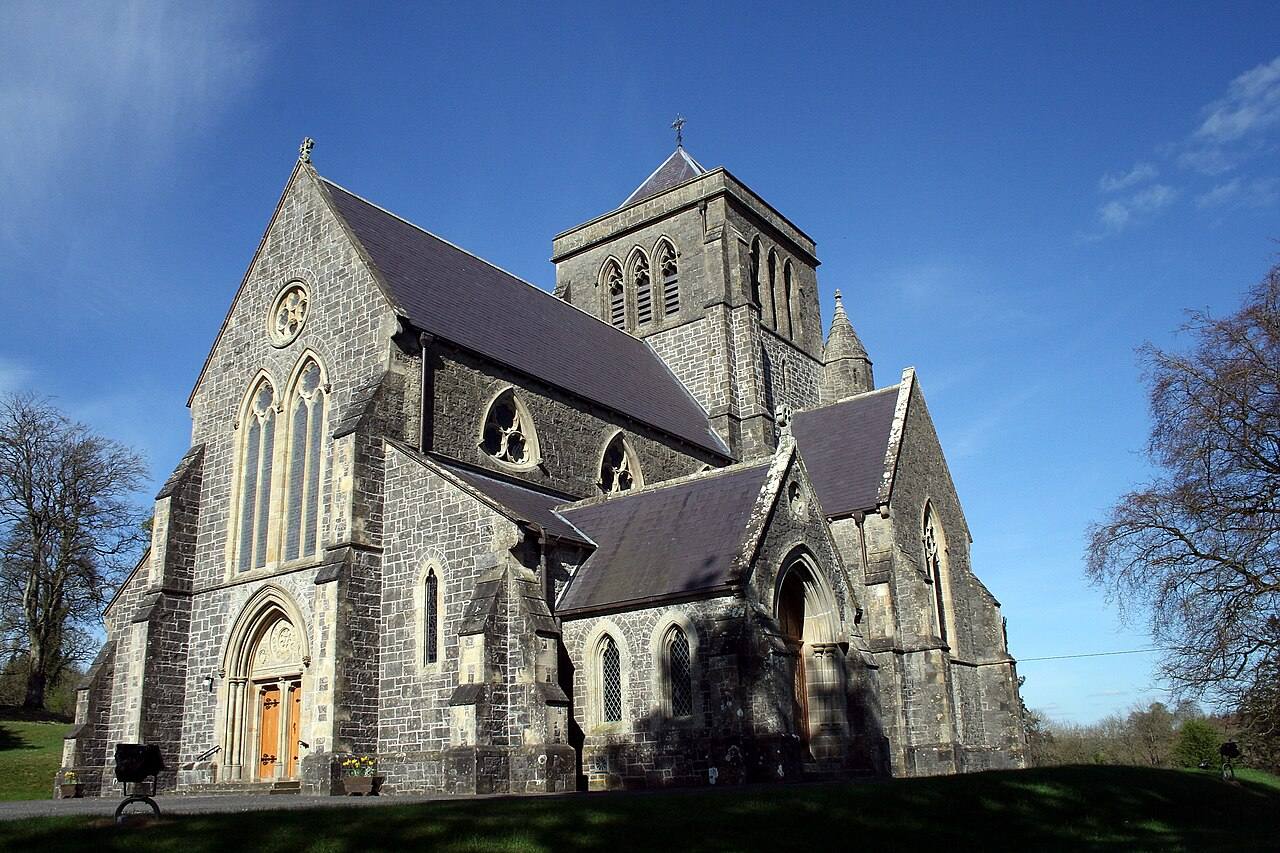
The cathedral itself, at Kilmore southwest of Cavan town, is the family’s spiritual home. The name means “the great church”, the current building dates from 1860, and tucked into its wall is a Romanesque doorway from around 1170 that has been quietly outlasting everyone since. If your Brady ancestors worshipped anywhere, they worshipped here, or at one of the older churches that stood on the same ground.
What the records can tell you
If you want to trace your Cavan Bradys, the tools are better than they’ve ever been, and the two big ones are both Cavan-shaped. Griffith’s Valuation, the great land survey of Ireland completed in 1868, lists every landholder in the county, townland by townland, with the value of their holding. It’s the single most useful document for finding where your family actually lived in the mid-19th century, and it’s free to search online.
Above that, the parish records — baptisms, marriages, burials — fill in the generations, though with the usual Irish caveats: many were kept in Latin, some were lost, and the priests had their own ideas about spelling. A Brady might appear as Brady, Brádaigh, MacBrady, or something the priest decided sounded close enough. This is normal. This is genealogy.
The diaspora, in every direction
The Bradys emigrated in the way Irish families did — famine, economics, and the general appeal of anywhere else — and the name is now common across the English-speaking world. The US census ranked Brady at 411th among American surnames in 2014, which is a remarkable result for a family from one county in the north of Ireland. There are more Bradys in New York, Boston, and Chicago than there are in Cavan, and they all descend from the same handful of townlands.
One footnote the family enjoys: in 2013, the British Medical Journal used the surname in a piece on nominative determinism — the theory that your name steers your career — because the world has produced cardiologists called Brady, which is one of the greatest accidental jokes in medical history. A Brady studying bradycardia is not a coincidence; it’s a destiny.
Graveyards, townlands, and the patience of the dead
The graveyard records are where the family story gets properly local. Cavan’s churchyards hold generations of Bradys, and the headstones — when they survive — give you dates, relationships, and the occasional blunt inscription that tells you the deceased had opinions. Old graveyards are the original genealogy database, and unlike the websites, they don’t charge you for a subscription. They do, however, charge you in nettles and briars, and the reading of a worn headstone in the rain is a rite of passage for every Irish family historian.
The townland is the other key. In Ireland, the townland — the small, ancient land division that predates the English system — is the address that never changes, and it’s the thread that ties the records together. Your ancestor wasn’t from “Cavan” in the way you might assume; they were from Mullagh, or Killeshandra, or one of a thousand townlands whose names are older than the county itself. Find the townland, and the records start to line up.
The Cavan County Museum in Ballyjamesduff is worth a trip even if you never find a single new ancestor. Its collections cover the county’s 6,000 years, including the famine and emigration stories that scattered the Bradys of Cavan across the world, and its local history resources are the sort that the big genealogy websites can’t replicate. The staff know the county’s families in the way that only people who have been asked the same question a thousand times can know them.
And don’t overlook the emigration records. The Bradys left in their thousands, through Belfast and Derry and Liverpool, and the passenger lists, census returns, and naturalisation papers on the other side of the Atlantic are often where the trail picks up again. The famine years emptied whole townlands, and the letters home that survive are the closest thing we have to a family newsletter.
How to start your own search
Begin with what you know: your grandparents’ names and townlands. Then work backwards through Griffith’s Valuation to the mid-1800s, use the parish registers to fill in the gaps, and brace yourself for the discovery that your great-grandfather’s name was spelled four different ways, none of them the way you spell it. The Cavan County Museum in Ballyjamesduff has local history resources and staff who know the county’s families; the genealogy websites are worth the subscription; and the townlands are the key — in Ireland, the townland is the address that never changes.
And when the records run out, as they will, remember that you’re a Brady. The records ran out for the same reason they ran out for everyone: a fire, a flood, a priest with a grudge, or a clerk who couldn’t spell. It doesn’t mean your family wasn’t there. It means they were too busy being there to write it down.
After a day of parish registers and graveyards, you’ll have earned a proper meal, and Cavan town has exactly the place for a genealogist’s lunch — the 72-hour sourdough at Luso, which is the kind of pizza that makes you grateful your ancestors stayed long enough to leave you here. The menu is at https://luso.ie/dine-in-menu/, and the story of the place is on the Luso website. Sláinte, and good luck with the spelling.
Further reading
https://en.wikipedia.org/wiki/Breifne
One Response