
Cavan Burren Park: A Walk Through 340 Million Years
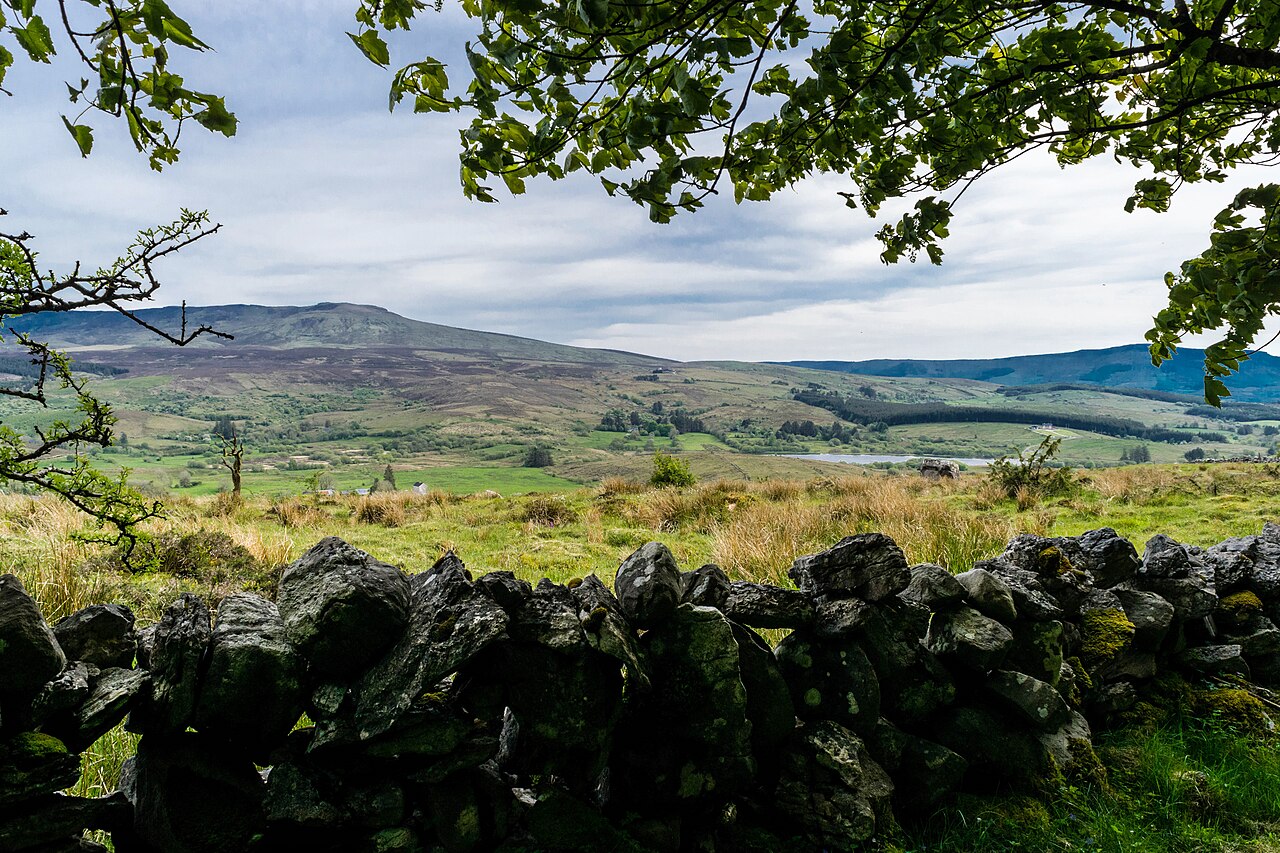
Stand in Cavan Burren Park and you are standing on limestone that formed in a shallow tropical sea about 340 million years ago, at a height of roughly 295 metres, under the shoulder of Cuilcagh Mountain, in a county that most people associate with rain and cattle.
The park is on the N16 outside Blacklion in west Cavan, about four kilometres off the road, and it is free to walk into all year round. It is recognised as one of the finest prehistoric relict landscapes in Ireland, which is a phrase that sounds like heritage-speak until you understand what it means. It means the place stopped changing. Forestry came in around it in the 1950s and the ground underneath kept what was on it, so the walls, tombs and field systems that would have been ploughed flat almost anywhere else are still sitting where they were left.
The geology, which is the easy part to explain
The bedrock is limestone, laid down in the Carboniferous period when Ireland was somewhere near the equator and considerably warmer than it is now. What you can see of it today includes a relict river bed running through the area known as the Lost Valley, where a river sank and disappeared underground, along with the dolines and sinkholes that mark where the ground has quietly fallen into the space below.
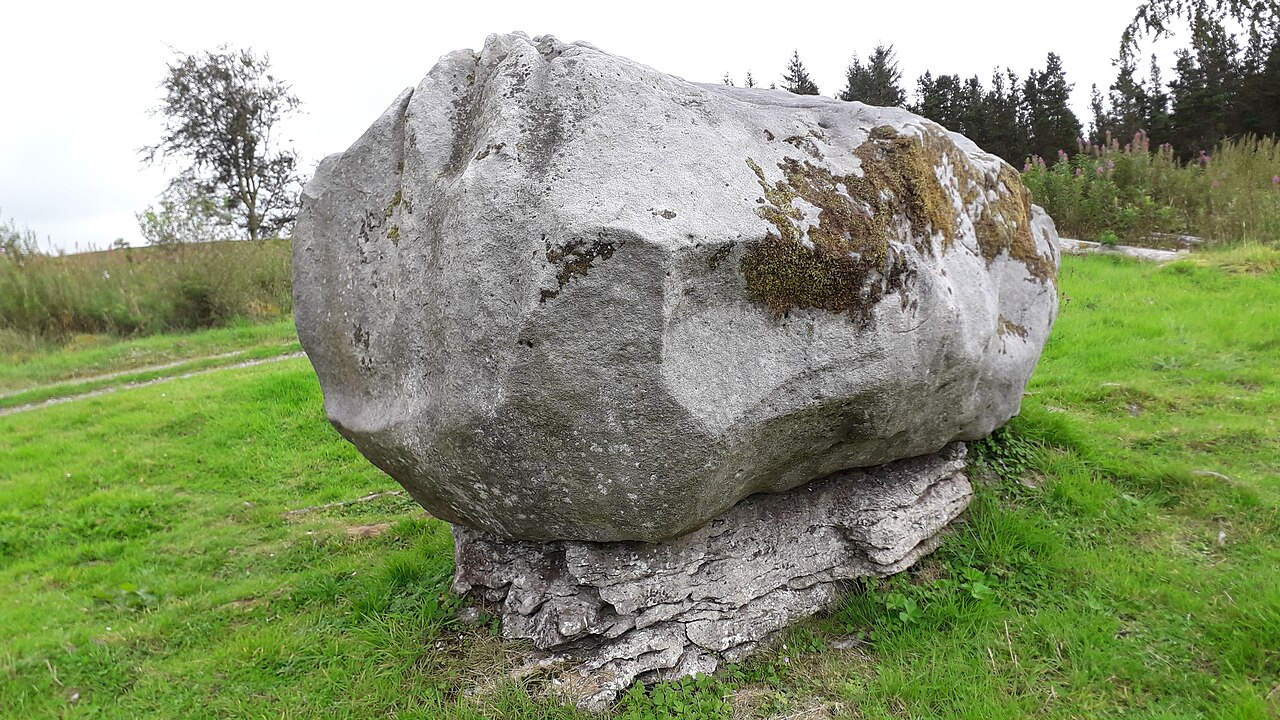
Then, much more recently, the ice. About thirteen thousand years ago the last glaciation left large sandstone boulders sitting on the limestone, sometimes balanced on pedestals, which is why they look as if somebody placed them. Geologists call them glacial erratics, and the park is full of them. They are sandstone in a limestone landscape, which is the giveaway. They were carried here from somewhere else entirely.
And the archaeology, which is the better story
Around 4,500 BC, at the beginning of the Neolithic, the first farmers arrived. They cleared the forest, settled, farmed and buried their dead here, and the monuments they left are the reason the park exists.
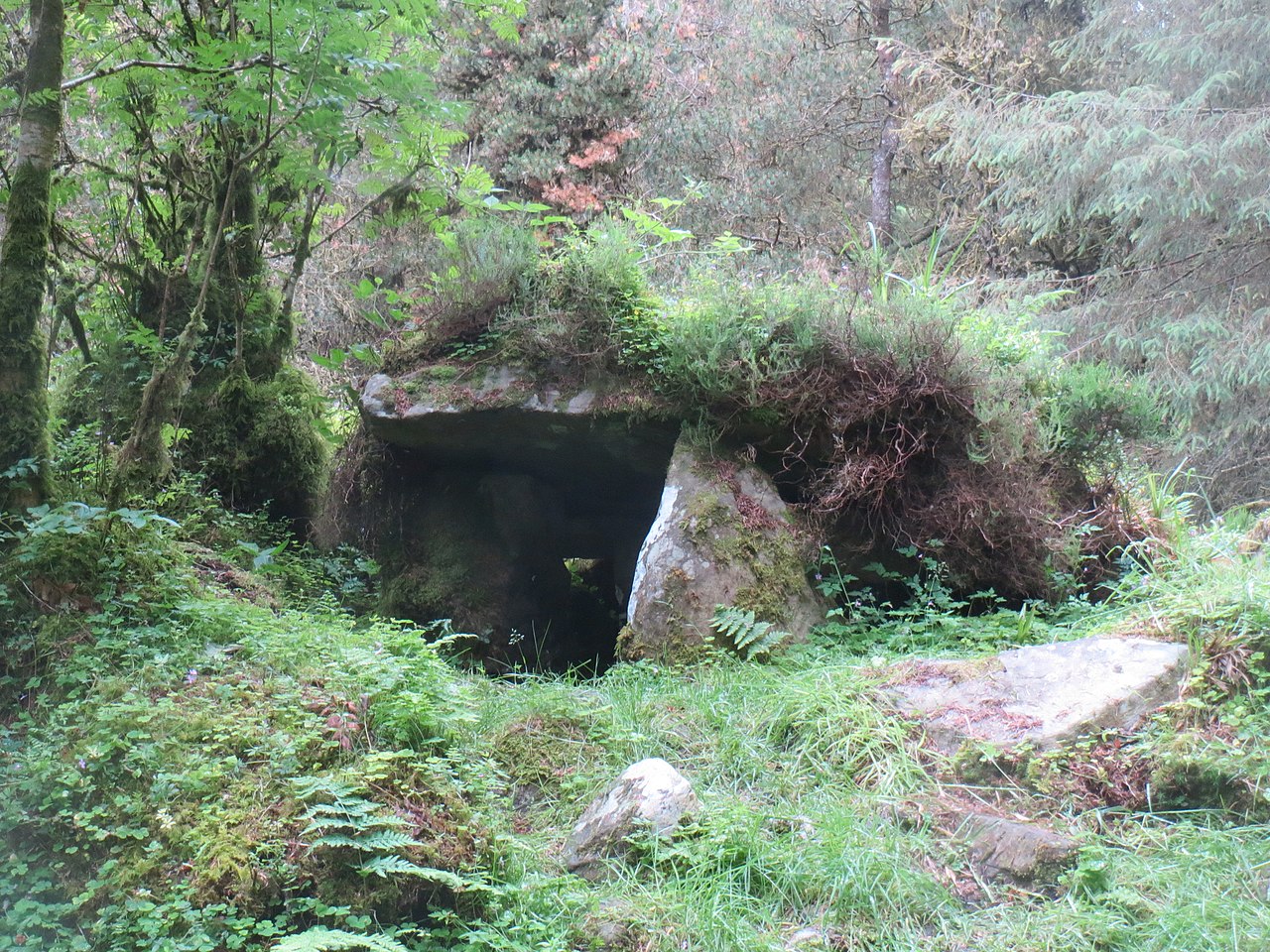
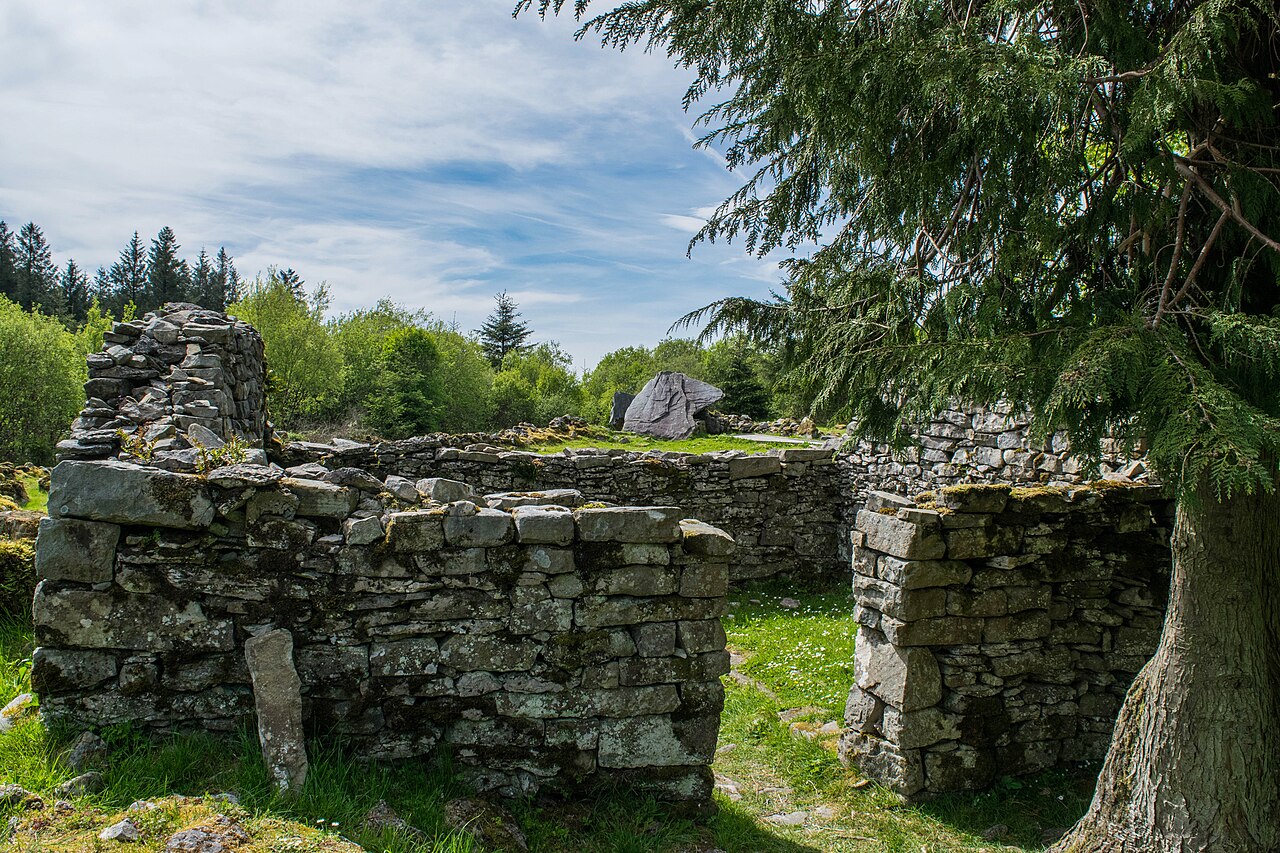
The Giant’s Grave wedge tomb is the best known of them. The Giant’s Leap wedge tomb is the more impressive, being one of the most intact megalithic wedge tombs in Ireland, which is not a small claim for a country with a great many of them. The Calf House Dolmen sits under the field system, and the remains of old farm walls run across the ground in lines that predate the boundaries that surround them. There is also a promontory fort in the Lost Valley with views across the whole thing.
What strikes people who have been to the Burren in County Clare is how green this one is. The Clare Burren is bare grey pavement. Cavan Burren is a wooded, mossy, walking landscape where the monuments are half swallowed by vegetation, and the effect is less like a museum and more like finding something in the undergrowth.
The trails
There are over ten kilometres of trails in total, four of them named. All four start from the interpretive centre car park.
The Calf House Dolmen Trail is 1.3 kilometres with about a 25 metre climb, on a multi-access surface, and takes roughly thirty five minutes. It gets you to the Tullygobbin wedge tomb, a viewpoint over the Lost Valley, the Calf House Dolmen, an old farmstead, glacial erratics and the karst limestone with its dolines and sinkholes. If you only do one, and you are not able for rough ground, this is the one.
The Giant’s Leap Trail is 2.7 kilometres on bog bridge and gravel with a 35 metre climb, about fifty minutes, and it is the one to do if you want to see the wedge tomb at its best. The Promontory Fort Trail runs 2.9 kilometres with a 65 metre climb, roughly an hour, through the Lost Valley past the fort and the relict farm walls. The Tullygobbin Lough Trail is 1.6 kilometres on gravel past a small lake with a lot going on in it.
The longer route through the park is the Cavan Way, all 26 kilometres of it, running from the village of Dowra to Blacklion in west Cavan. That is a full day for anybody reasonably fit, and a long one.
The centre, the guides and what else is up there
There is an interpretive centre at the car park with the usual displays and toilets, and it is the sensible place to start if you want to know what you are looking at before you walk past it. Group tours and guided walks run through the year, and there is a Leave No Trace policy in force, which in a place like this is not box ticking. A limestone pavement that took three hundred million years to form does not recover from being walked on in the wrong place.
The biodiversity is better than the bare description suggests. The limestone supports plants that need lime, the bog areas support plants that need acid, and having both within a short walk of each other is unusual. Orchids turn up in summer. Adders have been recorded in the wider Cuilcagh area, so keep dogs close and put your hands where you can see them.
Worth knowing too that Cavan Burren is not the only thing up this end of the county. Marble Arch Caves is a short drive away and the Cuilcagh boardwalk, the one everybody calls the Stairway to Heaven, is the famous walk in the region. Cavan Burren is the quieter alternative, and on a busy bank holiday that is worth a great deal.
Practical notes
Admission is free. The gate is open from 8am to 6pm between October and March, and 7am to 10pm from April to September, and it is locked outside those hours, so do not plan a sunset walk in November unless you enjoy explaining yourself.
Directions are simple enough. Head for Blacklion, take the N16 Sligo road out of the village, and take the left turn signposted for Cavan Burren Park just before you leave. Follow the signs for about four kilometres. It is about forty minutes from Cavan town, forty from Sligo and twenty from Enniskillen.
Bring boots rather than trainers, because bog bridges and limestone in the wet are a poor combination for smooth soles. Bring a coat even if it is fine, because the weather on that plateau changes faster than the forecast can keep up with. And bring more water than you think you need, because there is nowhere to get any once you are past the car park.
Afterwards, Cavan town is forty minutes back down the road, and a walk that takes in three hundred and forty million years of geology and five thousand years of human stubbornness does tend to make a person hungry. Our locations page covers how the collection runs work from the villages and towns around the county. In our own case it is a straight run back to Church Street, which is not a bad way to finish a day that began in a tropical sea.
Further reading
https://www.cavanburrenpark.ie/
https://www.marblearchcaves.co.uk/