
Boxty: The Cavan Griddle Bread That Nearly Disappeared
There is a rhyme about boxty that has outlived most of the food it describes. Boxty on the griddle, boxty on the pan. If you can’t make boxty, you’ll never get a man. As baking instructions go, it is unusually threatening.
It is still said in Cavan, usually by somebody’s grandmother, usually with the person being warned standing right there. The bread is harder to find than the rhyme. Boxty is a potato bread made from raw potato rather than cooked, and that single detail separates it from every other potato cake on the island. It belongs to the north midlands and south Ulster, and the counties that claim it are Leitrim, Mayo, Sligo, Fermanagh, Longford and Cavan. Cavan is squarely in the middle of that map.
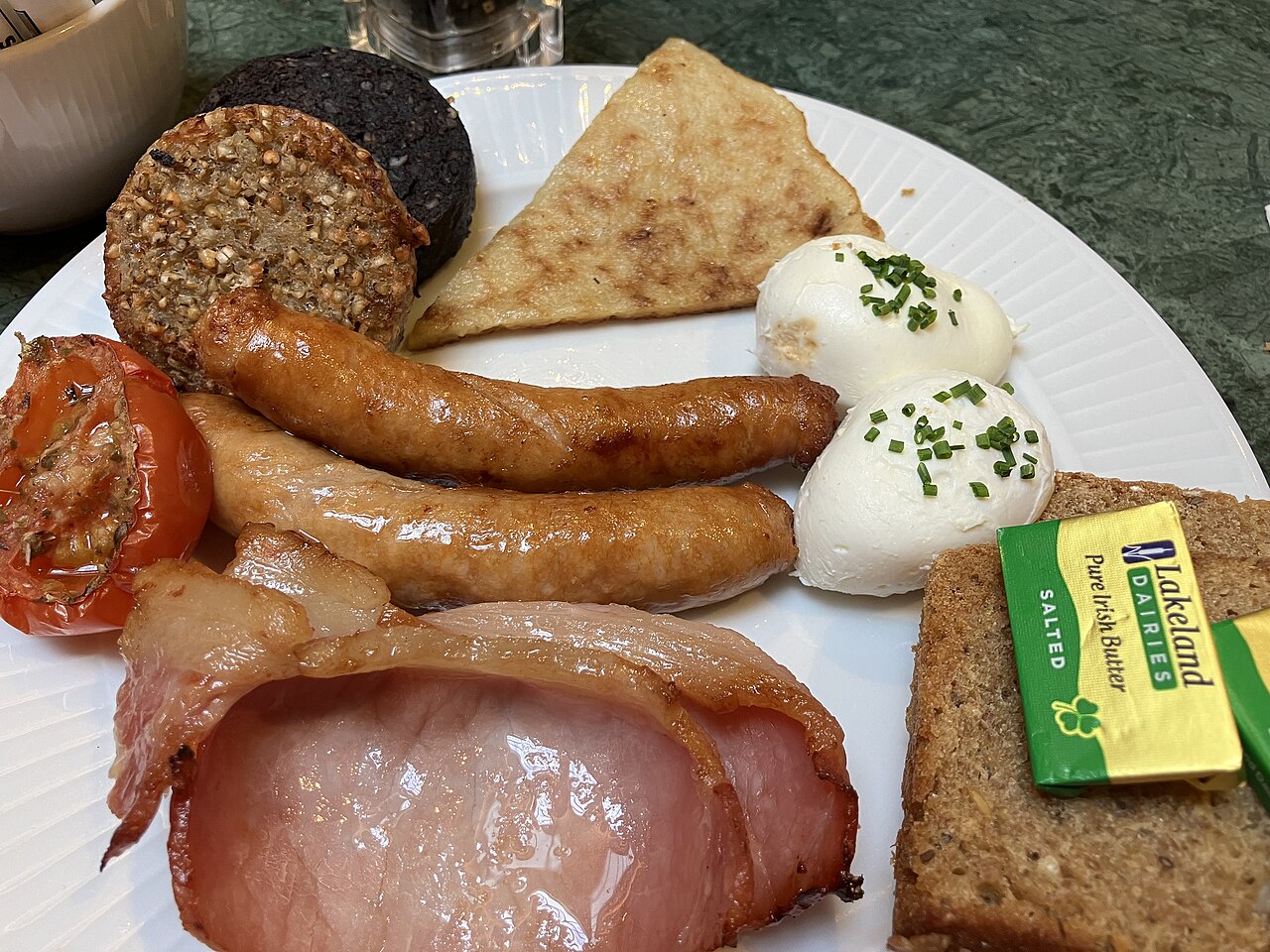
Raw potato, and why that matters
Grate a raw potato and you get a wet, pale pulp that goes grey if you look at it too long. Grate it over a cloth, squeeze, and let the liquid stand for half an hour and something useful happens. A fine white starch sinks to the bottom of the bowl. That starch is the whole trick. It is what holds a boxty together without turning it into a dumpling.
The rest of the method is short. Mix the squeezed grated potato with an equal quantity of cold mashed potato, add flour, a pinch of salt, a little bicarbonate of soda and enough buttermilk to bring it to a dropping consistency. Spread it on a hot griddle, or a heavy pan if that is what you have, and give it four or five minutes a side. What comes off is smoother and finer than a potato farl, with none of the loose crumb you get from a cake made with cooked potato alone.
That texture is the thing people remember. Boxty is not lumpy. It has a tight, almost elastic grain, and it takes butter the way a good soda bread does.
The three or four versions
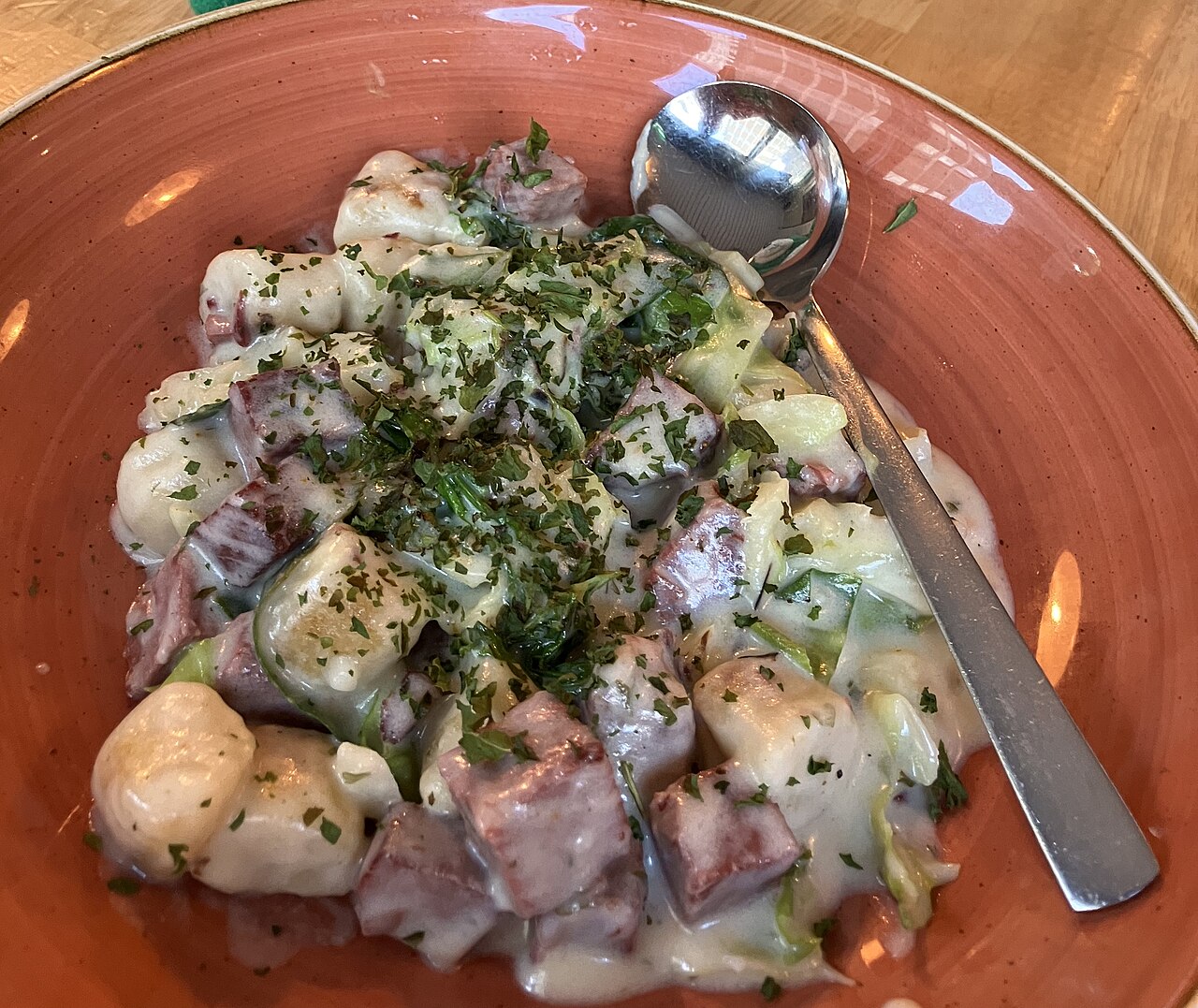
Boxty in its pan form is the one most often meant, fried in rounds and eaten hot with butter, bacon or an egg on top. Boxty bread is the same mixture baked thicker and cut in wedges, which is what you want if you are feeding a table. Boxty dumplings are dropped into boiling water or broth and come out like heavy, satisfying gnocchi, which is not a comparison anyone in Leitrim would thank you for making but is the honest one.
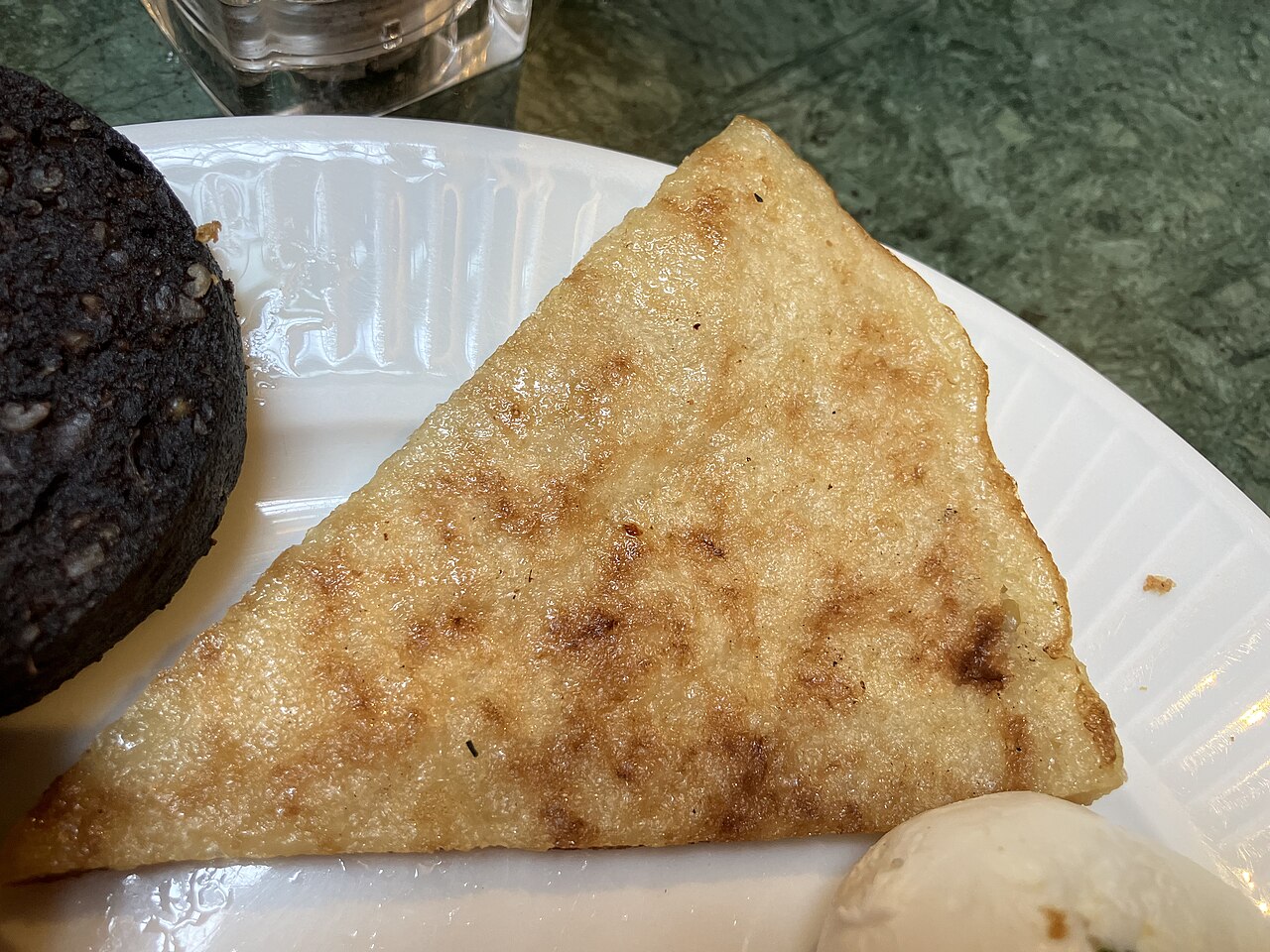
There is a fourth version that people argue about and a fifth that people invent at Christmas, and both are usually just the pan version with something added. The triangle cut, with a bit of black pudding alongside it, is the one that turns up on hotel breakfast menus in the border counties, and it is a fine introduction if you have never had it.
Why it nearly disappeared
Grating potatoes by hand is miserable work. It is wet, it is slow, and your knuckles take a beating. For most of the nineteenth century that was the price of the dish, and it was worth paying because potatoes were what there was. When the food processor arrived, the labour argument evaporated, and the dish should by rights have come back strongly. It did not, and the reason is probably that the generation who made boxty by feel had already stopped making it by then. A recipe that lives in the hands is hard to pass on if nobody is standing beside you watching.
Boxty is also, in its plainest form, a food associated with poverty, which is a hard thing to sell in a country that spent the twentieth century trying to forget being poor. Soda bread escaped that association. Boxty mostly did not.
Boxty is not a fadge, and this matters
The confusion is understandable. Ireland has several potato breads and they all get called the same thing by people who did not grow up with the distinction. A fadge, or potato farl, is made from cooked potato, flour and sometimes a little milk, and it is the thing you get fried in a full breakfast across Ulster. A boxty is made from raw potato, which gives it a wetter mixture before cooking and a finer, denser grain afterwards. A boxty will hold a runny egg. A fadge will not, at least not gracefully.
Then there is the flour question. Some families use plain flour, some use a mix, and some use no flour at all and rely entirely on the starch that settled out of the grated potato water. That last version is the purist one and the hardest to get right. It produces the best boxty and the most failures, which is a fair description of most traditional cooking.
Where you still find it
Boxty has held on better than most of the old griddle breads, which is partly down to the rhyme and partly down to the fact that it travels well in a fridge for a day or two. You will find it on hotel breakfast menus in the border counties, in a handful of pubs that have leaned into the heritage angle, and in shops and supermarkets in dumpling form or ready cooked as pancakes. It has also picked up a second life in restaurants outside the counties that own it, which happens to Irish food generally once somebody decides it is interesting.
The homemade version is still better than anything in a packet, and it takes about twenty minutes once the starch has settled. Which is to say it takes forty minutes, because nobody accounts for the settling.
Making it properly, briefly
Two large floury potatoes, raw, grated and squeezed dry. Two more, boiled and mashed and cooled. Around a hundred grams of plain flour, half a teaspoon of bicarbonate of soda, a good pinch of salt, and buttermilk to loosen. Mix, rest for twenty minutes so the starch can do its work, then cook in a hot buttered pan in rounds about a centimetre thick. Keep them warm under a cloth while you finish the batch, because they are much better hot.
If the mixture feels wet, add flour. If it feels stiff and dry, add buttermilk. There is no fixed number here and any recipe that gives you one has not made it in a kitchen with the heating on.
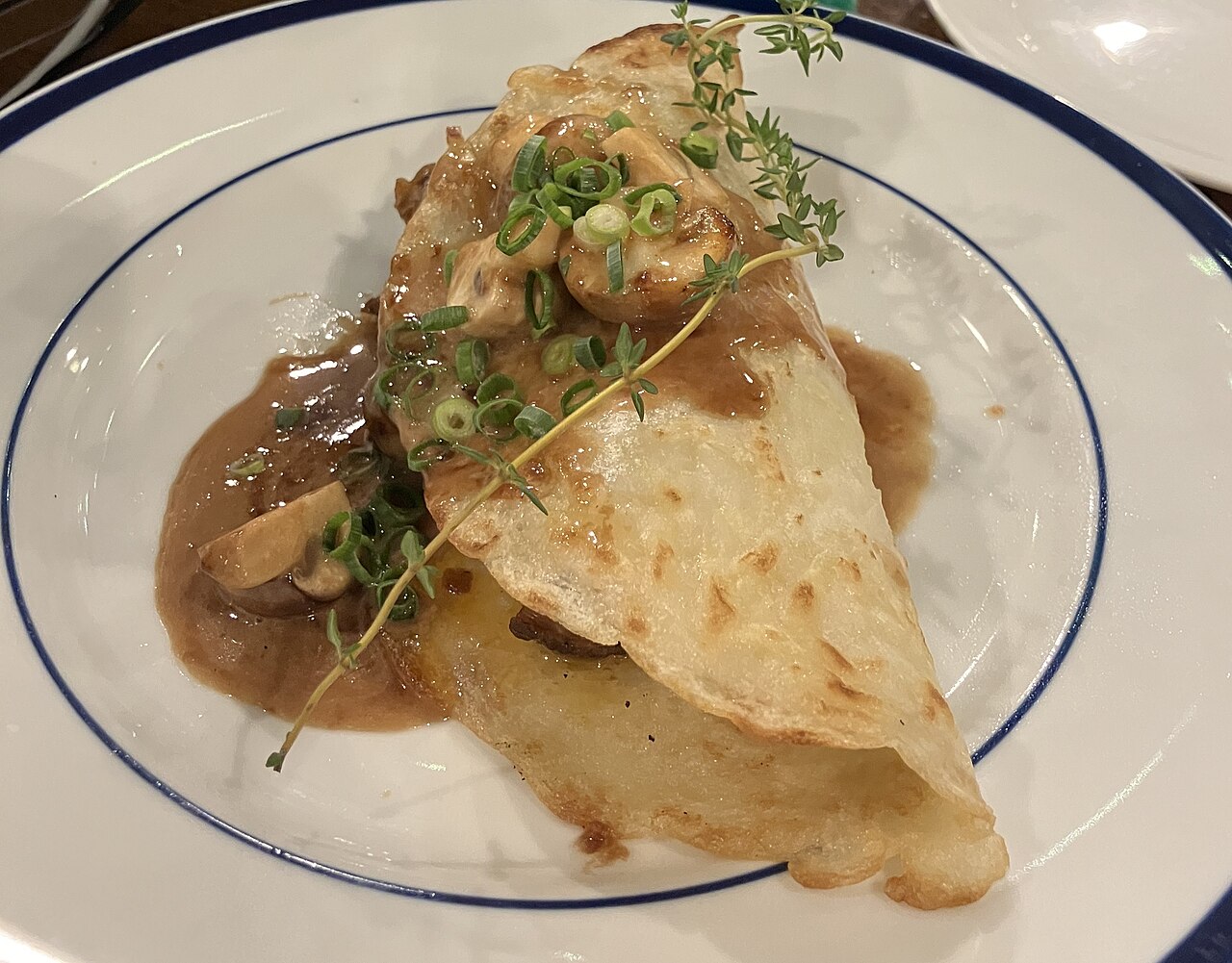
Where a griddle bread sits next to a wood-fired oven
Cavan’s food story is a strange one in that the oldest layer and the newest layer are only a few streets apart. Boxty came out of a county that grew potatoes because it had to. The current version of the same instinct is a kitchen making sourdough pizza and dry aged burgers with beef from a butcher up the road in Butlersbridge, which is a different century and the same idea about using what the county actually has.
You can see the modern end of that on the Luso dine in menu if you are curious what the newer half of the county’s cooking looks like. The griddle bread and the pizza will probably never share a menu. They are both Cavan, though, and they both make sense in a cold month.
One last piece of practical advice for anybody who wants to try it. Make twice as much as you think you need, because the first one always goes wrong. The second one is the one you were aiming for.
Further reading
https://en.wikipedia.org/wiki/Boxty
https://www.ireland.com/en-us/articles/food-and-drink/boxty/